/
1
·
Attempting to throw a bread sandwich from the 20th floor of a high-rise flat may not be an entirely successful way to feed hungry children, as Adam McNaughton’s famous 1960s Jeely Piece Glasgow folk song says. But a new bakery in one of the last remaining high-rise blocks in the city’s notorious Gorbals area is feeding hungry residents from the ground floor up.
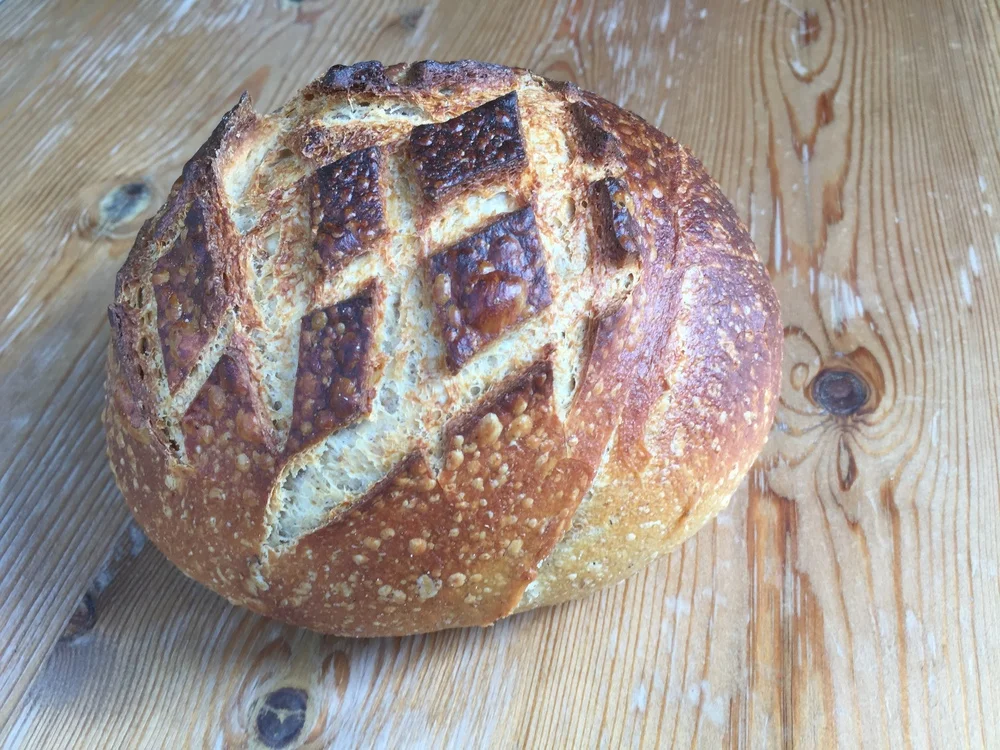
Local women have founded the High Rise Bakery, situated in the kitchen of 39 Waddell Court, and with a team of volunteers are baking and selling their nutritious made ‘Gorbals Loaf’ – using only rare unprocessed wheat flour, slow-rise yeast, salt and water - to neighbours in the block. There are plans to supply four local nurseries, an old folks’ home, a care centre for recovering addicts, and members of the Gorbals choir.
Catriona Milligan started the High Rise Bakery and works with volunteers from the local area to bake bread twice a week. She said: "Baking bread together is a very powerful way of building a community. It brings people together who can often feel lonely or isolated from society, and can help build up confidence.
"It is so good for us to know that local people enjoy eating our Gorbals Loaf. It proves that good nutritious bread isn't just for the privileged middle-classes."
The High Rise Bakers are the first community bakery to have been taught traditional artisan bread-making skills by Andrew Whitley of Bread Matters and Scotland The Bread based near Peebles. He believes "the bread we buy in Scotland is programmed for ill-health" and wants to empower local people and improve their health by helping them bake their own in the traditional manner, using unprocessed high-nutrition wheat grains, rather than buying industrially produced bread that is full of chemical additives.
“For hundreds of years bread was made the same way, with flour, water, yeast and salt. But in the 1960s, the national loaf was fundamentally redesigned and corrupted with the introduction of the Chorleywood Industrial Bread Making Process,” he told The Times. “The flour and yeast were changed and a combination of intense energy, hard vegetable fat and additives were used to dramatically speed up the process while reducing its nutritional value. It’s white, light, and stays soft for days. For a large number of people, though, it’s inedible. Some 90% of the bread we buy in supermarkets is made using the CBP. Coeliac disease, allergies and intolerances, obesity and other diet-related health issues are the result.”
He says it's a myth that Scotland can't grow bread-quality wheat, and that it’s the large-scale food producers who want us to believe that so we continue to consume “rubbish mass-produced bread”.
To prove his point Whitely has been working with scientists and nutritionists to grow trial crops of three ancient, highly nutritious Scottish wheat grains – Rouge d’Ecosse, Hunters Wheat and Golden Drop – in four different organic sites in Scotland. They have been sourced from seed banks at the Vavilov Institute of Plant Industry in St Petersburg, Russia, and from NordGen genetic resource centre near Malmo in Sweden. His eventual aim is to preserve these precious Scottish strains in a Scottish seed bank.
Initial testing by the James Hutton Institute in Dundee have shown that the Scottish wheat is considerably richer in iron, magnesium, zinc and other key nutrients than modern commercial flour.
Some ten tonnes of wheat have been successfully grown, with more on the way, and Whitely has now milled the first Scottish-grown wheat flour. Before he puts it out for sale to community and small bakeries across Scotland, he wants to have it nutritionally analysed and accredited by a specialist laboratory. This will cost £30,000 and a crowd-funded community share appeal, called Scotland the Bread, has almost reached its target ahead of the deadline of August 31.
“We have already raised £28,500, and we are delighted that the Ecological Farming Group at Newcastle University has offered £3000 of free testing in return for community shares,” he told The Times. “All going well, we anticipate being able to sell our Scottish bread flour by the end of the year.
“It’s important that it goes out with a clear message on the label. Made in Scotland doesn’t mean anything if we don’t explain what its nutritional advantages are.
“Thereafter, we would like to see farmers across Scotland growing their own Scottish wheat, and community bakers using it, so we have a continuous supply of healthy, sustainable, locally-controlled bread.”
He is also overseeing the growing of Scottish wheat in public spaces such as Glasgow’s Possil Park, Locavore Glasgow’s Neilston market garden, Urban Roots in Govan and Granton Growers, Edinburgh. This would not be for commercial use but to encourage local communities to make bread for themselves.
Meanwhile, the High Rise Bakers are basking in the reflected glory of their Gorbals Loaf, as well as cinnamon buns and shortbread, which they make every Wednesday and Friday. Refugees from Syria, Eritrea, Sudan, Iran and Nigeria have joined them and are introducing recipes from their own cultures.
“Doing this has changed our lives,” said local resident John Vallance, who hopes to become the High Rise delivery man. “Baking proper bread that is filling rather than fluffy gives you the feel-good factor – and since the aroma floats up to the very the top floor of the block, it’s spreading the smell-good factor too.”
* This exclusive article first appeared in The Times.