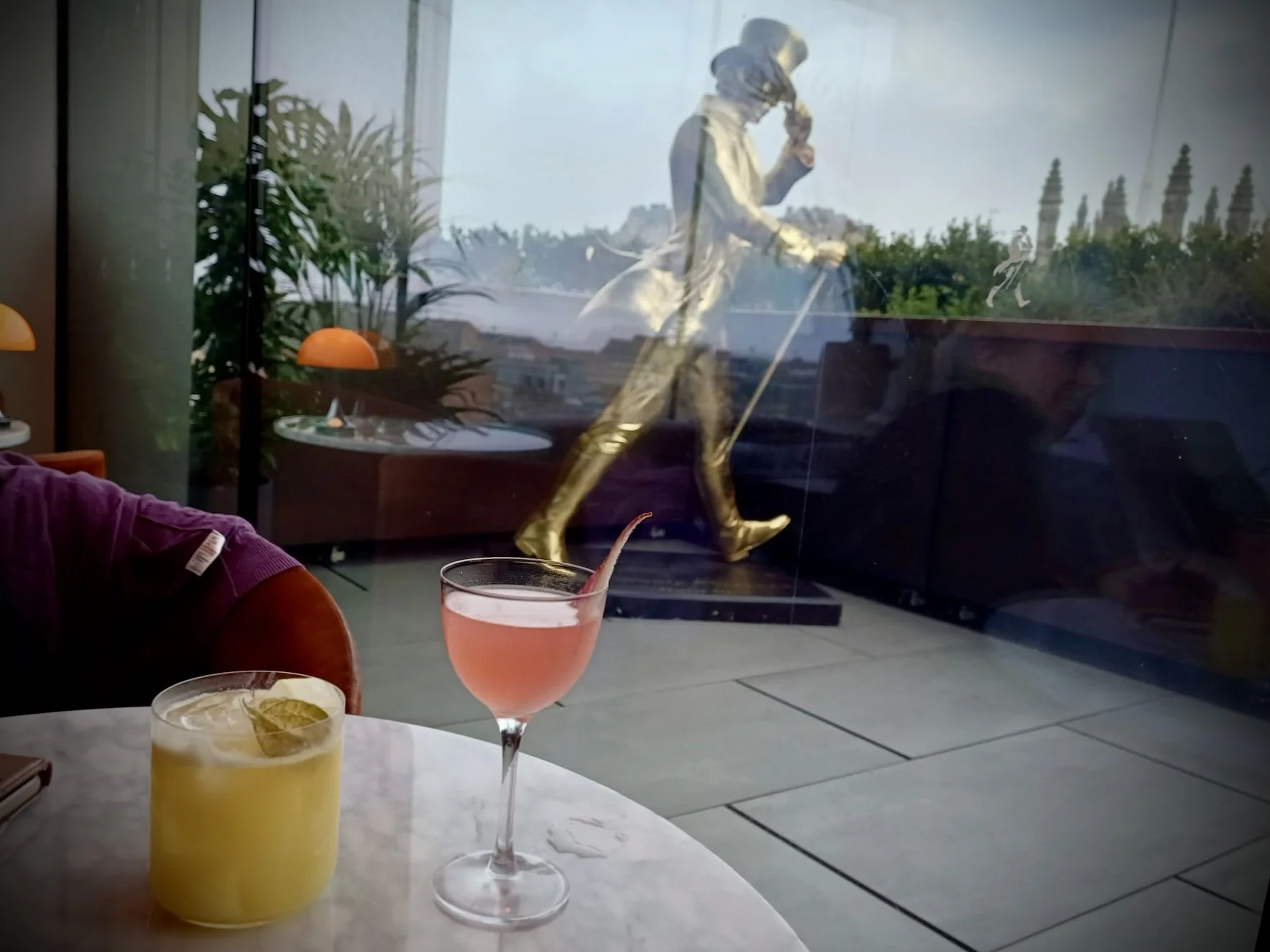
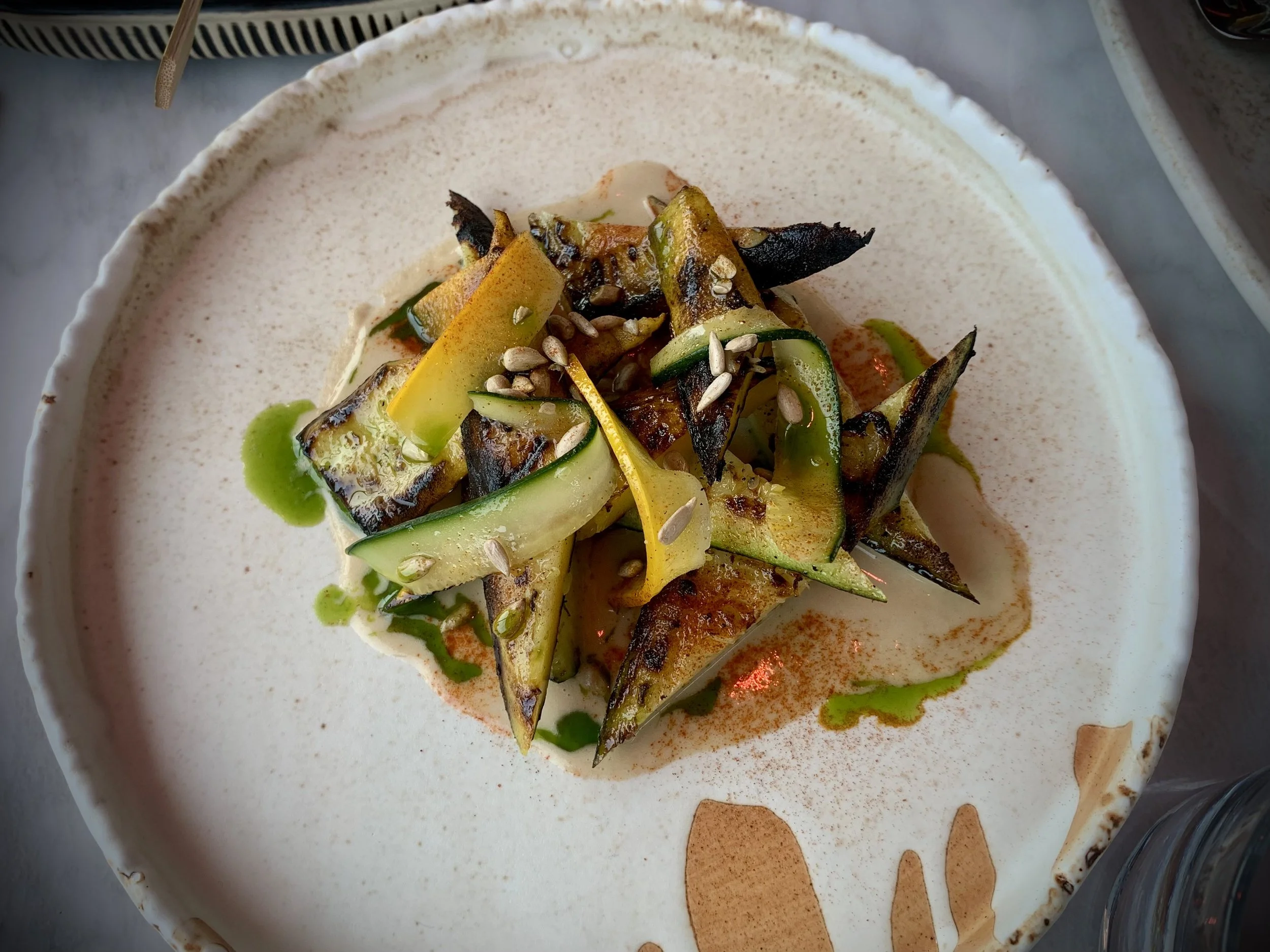
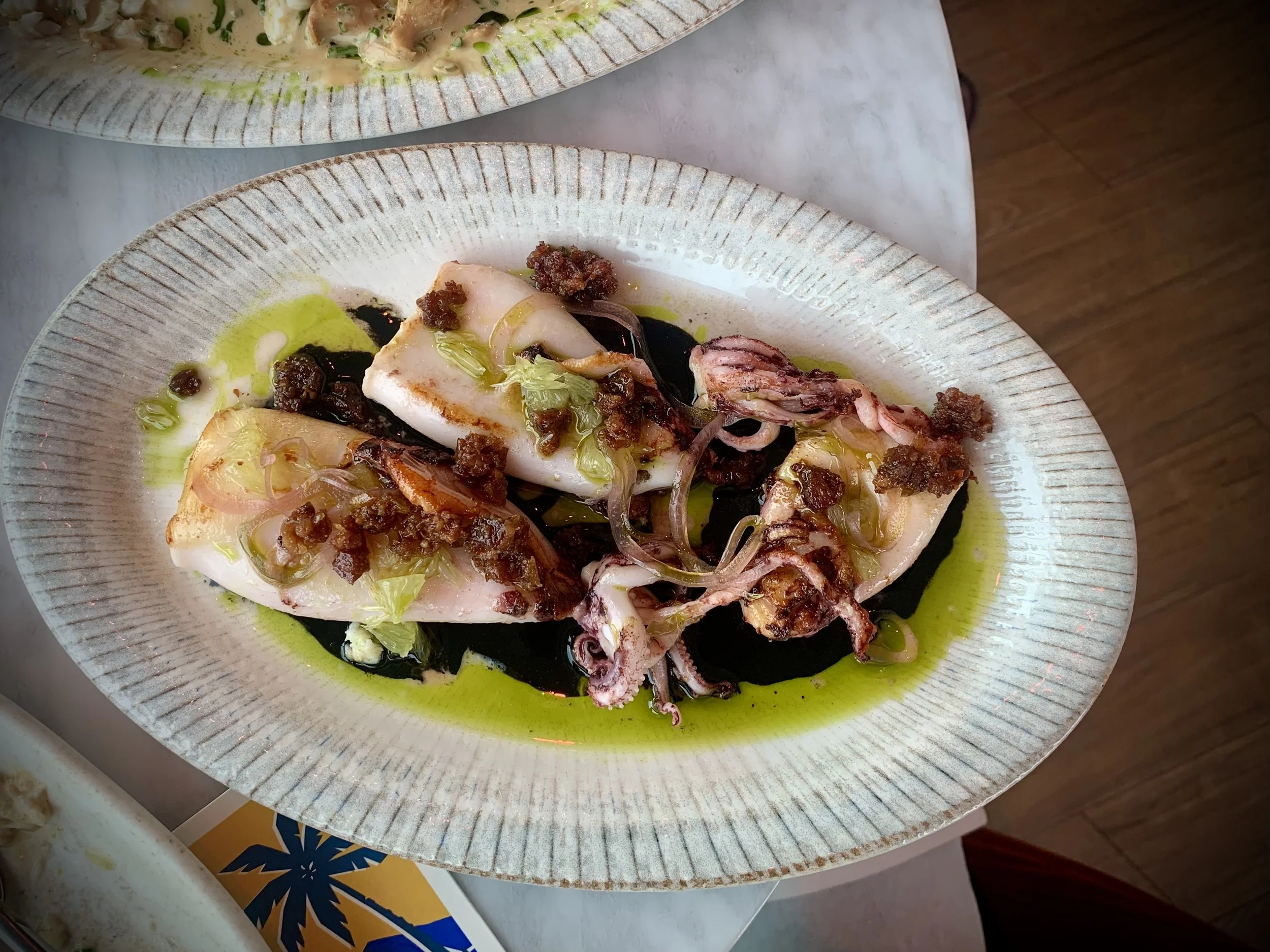
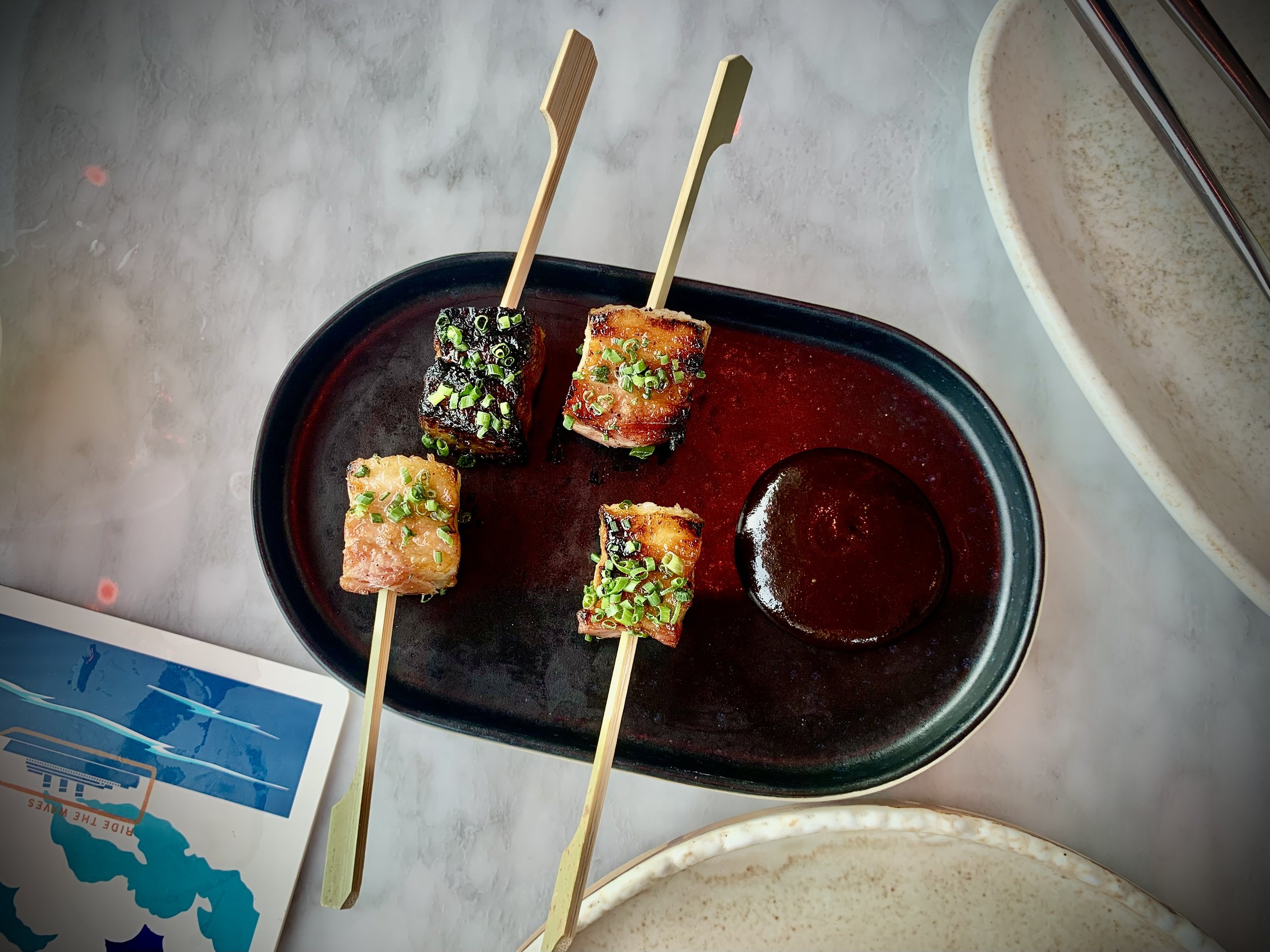
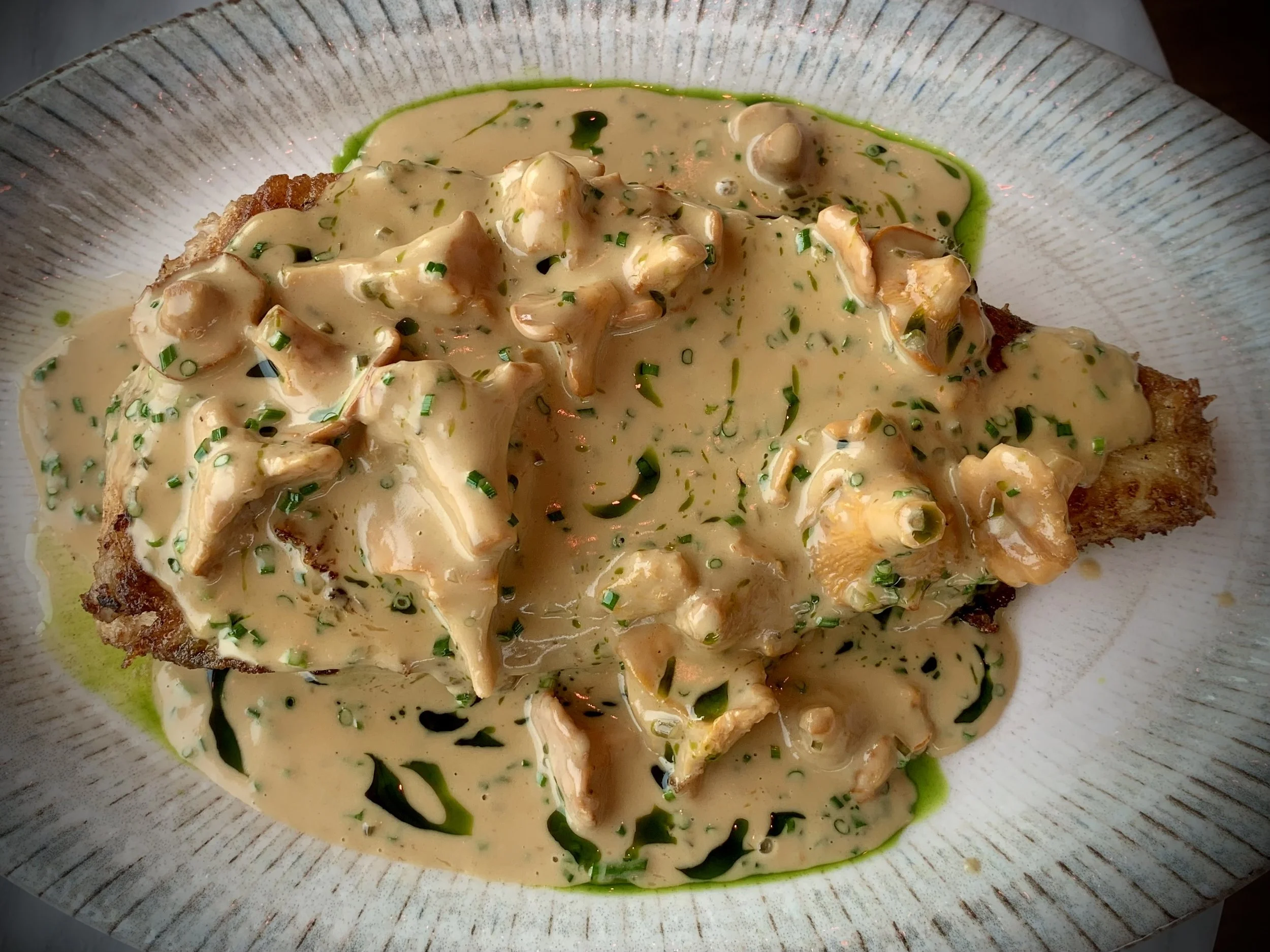
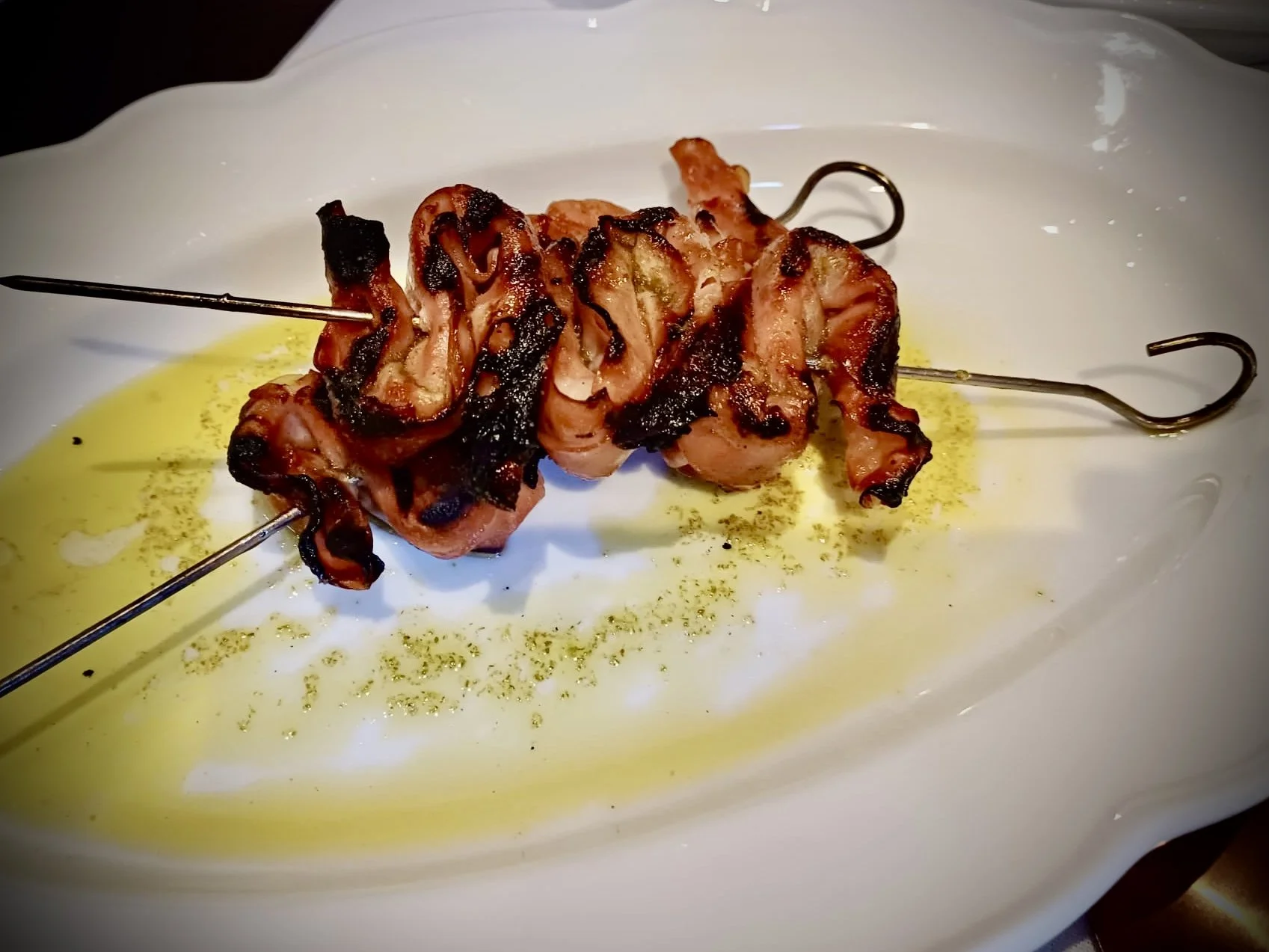
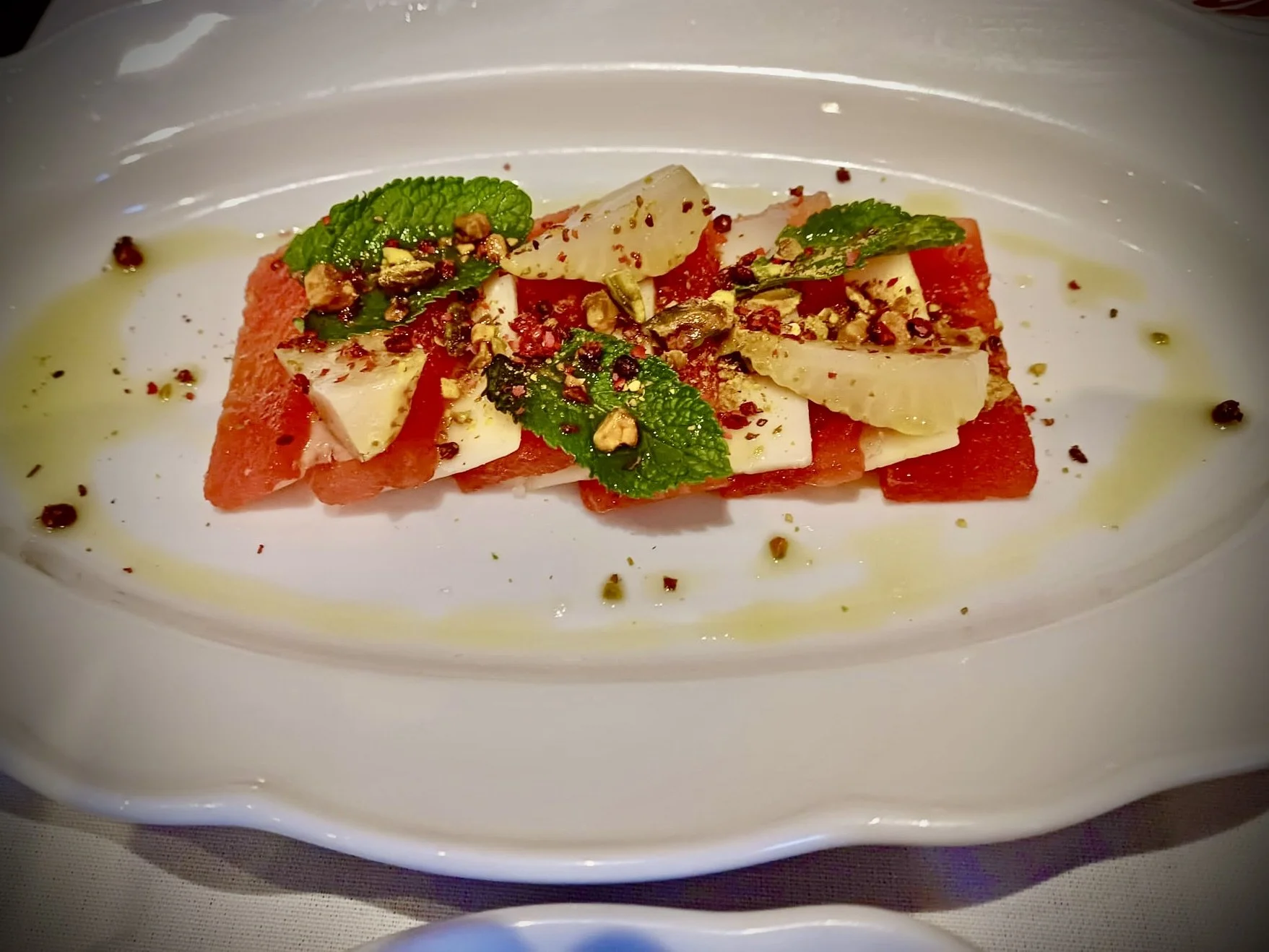
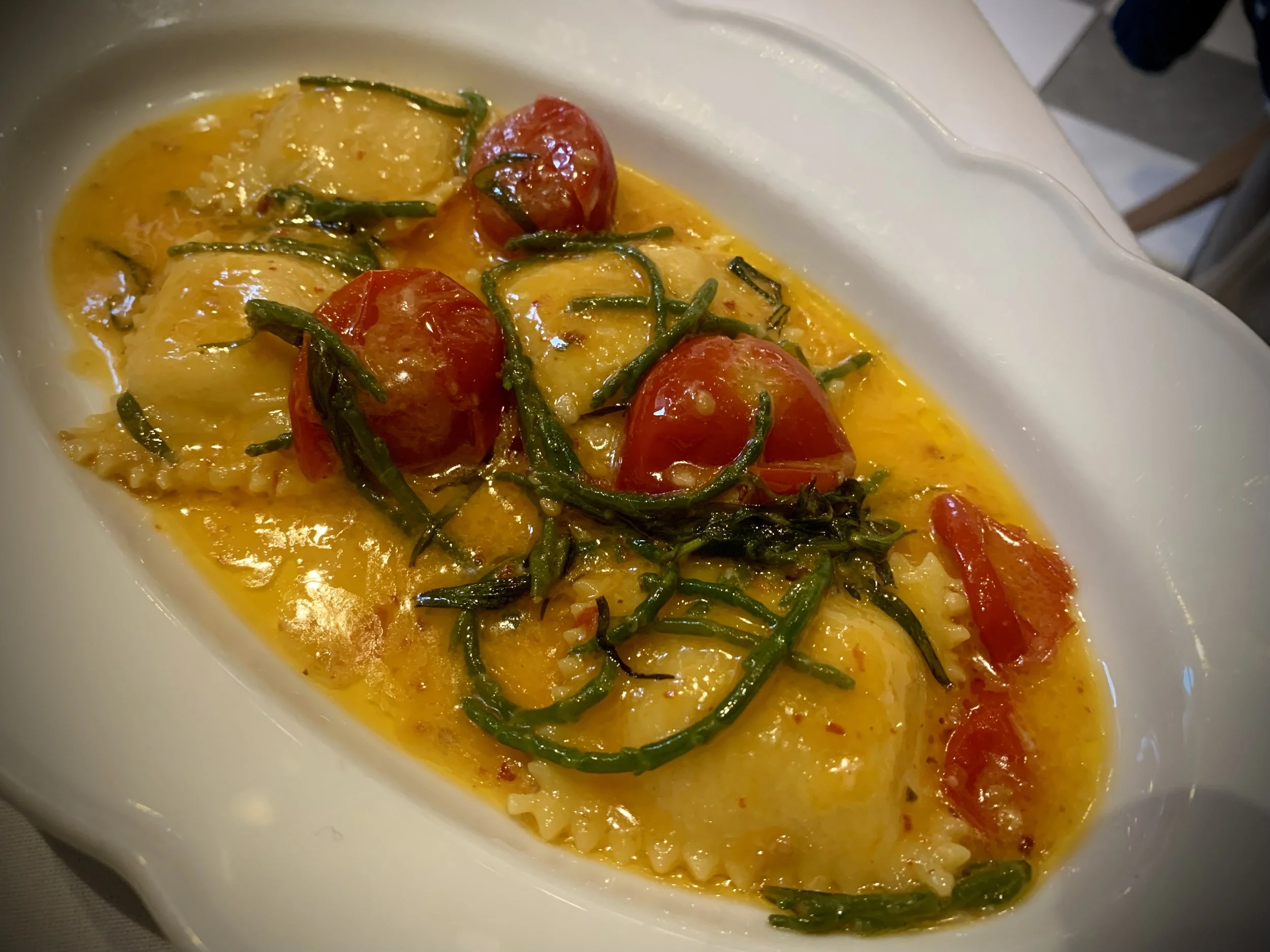
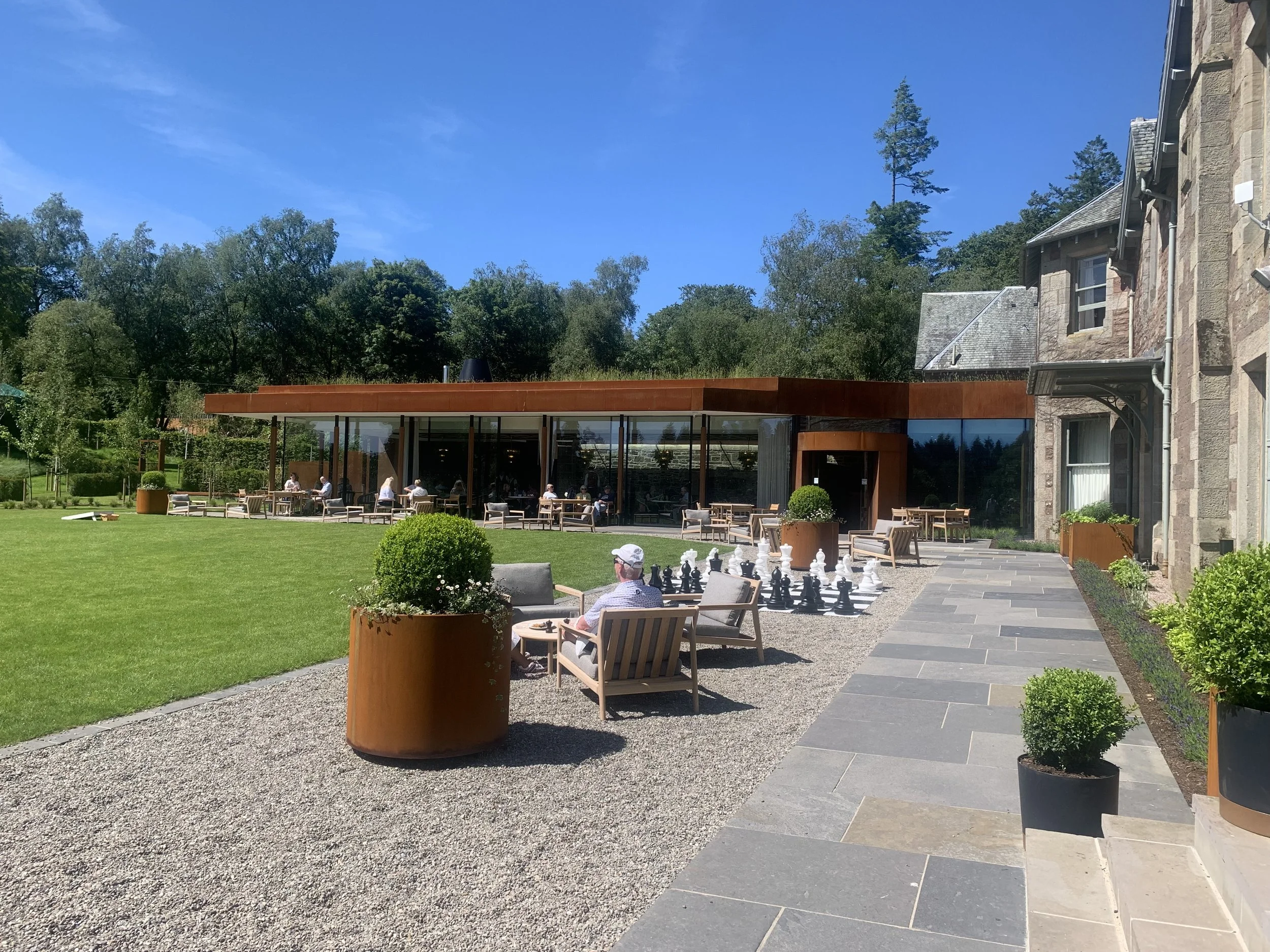
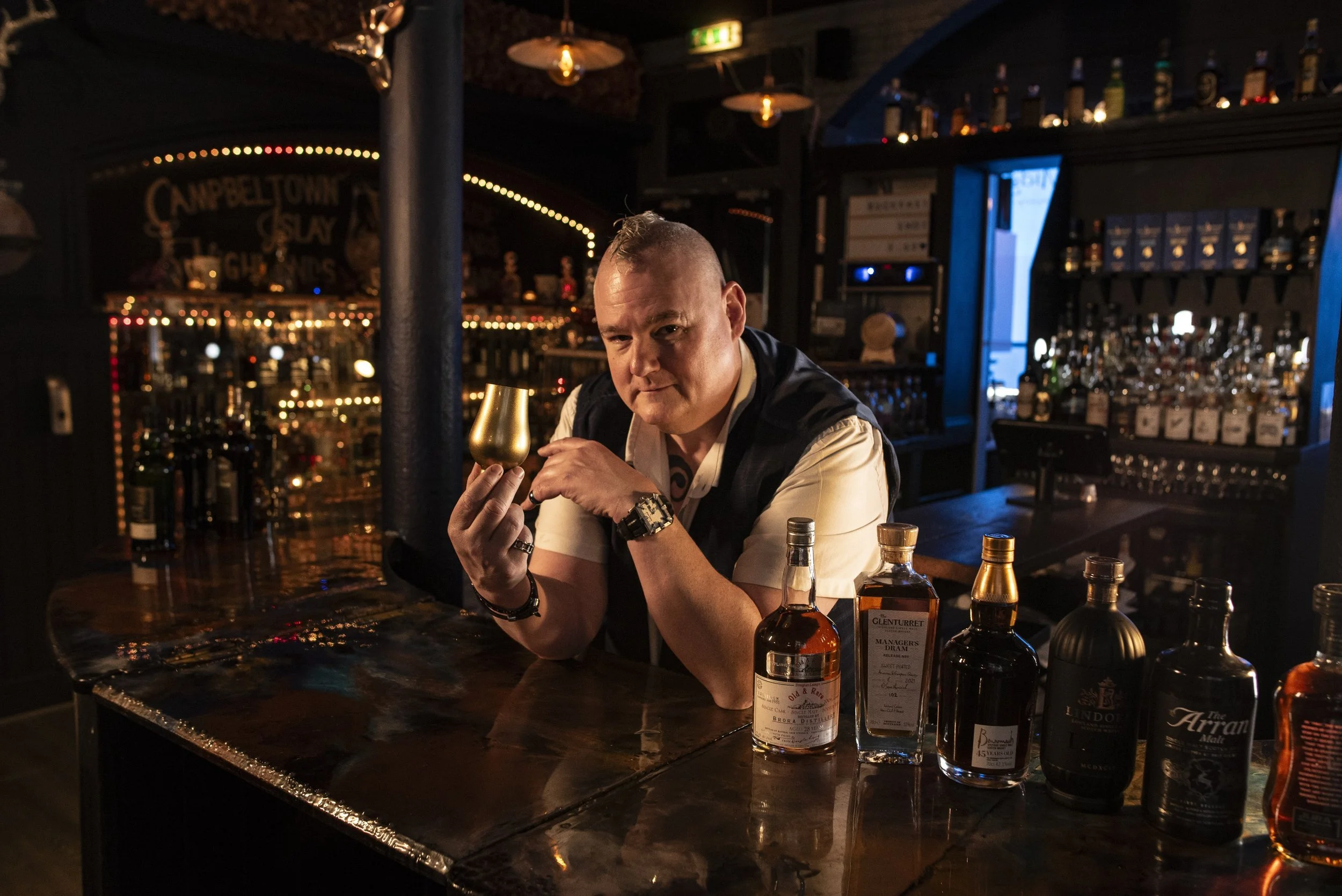
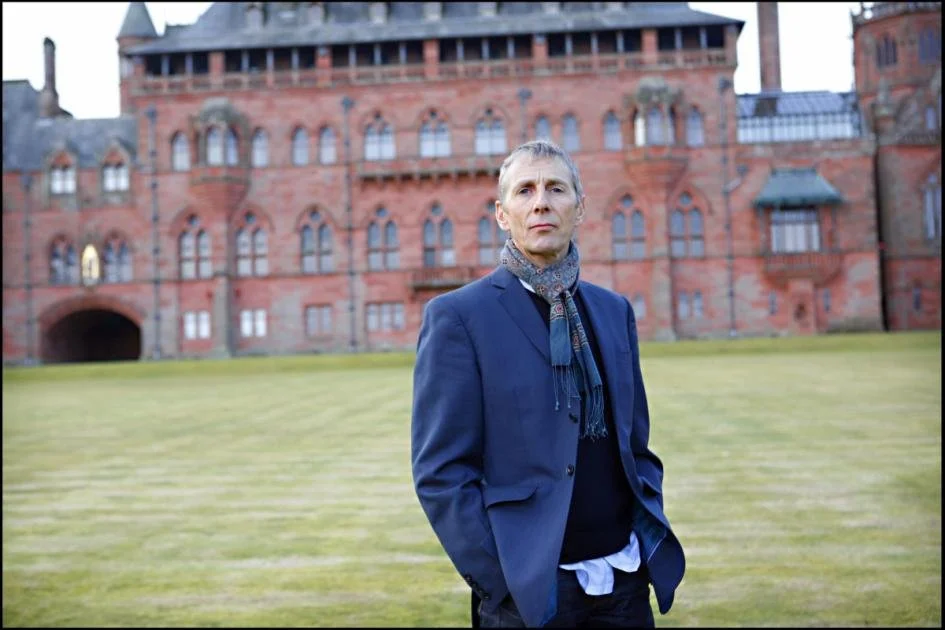
On a day trip to the Isle of Bute earlier this week, I made a point of visiting the brand new Bute Yard, (above) the brainchild of the late lamented Johnny Bute (formerly known as the F1 driver Johnny Dumfries), and was blown away by how it has already transformed the faded Victorian seaside town of Rothesay. But more than that, I experienced a sense of sorrow on Johnny’s behalf, because he never got to see his vision come to fruition as he died in 2021. However, it’s good to know the vast, beautiful space - with a bar, kitchen, pop-up event and market space and gorgeous garden - is run by his director daughter Cathleen Crichton-Stuart, and has some fantastic local partners in Bute Kitchen, Isle of Bute Smokehouse, Bute Brew Co and the Isle of Bute Distillery.
I was lucky enough to bag a face-to-face interview witth Johnny Bute st Mount Stuart in 2009, ahead of the launch of eatBute, his new food festival, which he hoped would become the blueprint for exactly what has happened in Bute Yard.
Meeting Johnny Bute was a memorable experience for me. The exclusive interview was published in The Herald , where I was senior staff writer, in September 2009, but sadly it has been purged from the archive so I’ve posted it in full here. Oh, minus the fantastic photograph of Johnny kneeling in the mud in his designer outfit and holding one of his beloved chickens …. a shame it too has been purged, as it was a priceless photo which totally chimed with Johnny’a surprise revelation that he wanted to return to farming as his father the 6th Marquis had done.
Here it is.
September 2009
When you arrive by boat on Bute, you’re not immediately struck by its rural richness. The pretty harbour at Rothesay ushers the visitor to the town’s faded, if charming, Victorian sprawl. Its Art Deco ironwork Winter Gardens are now the Discovery Centre, and the famous Zavaroni’s cafe is still going strong. Stone and stucco villas reflect its wealthy past. But Rothesay’s pubs, pizza parlours, and Indian and Chinese takeaways hardly reflect its potential as a foodie destination. The local Co-op and Somerfield do their best but their dependence on deliveries from the mainland are subject to the vagaries of island life.
Up the road at Mount Stuart, the magnificent red sandstone Gothic palace that has been the family home of the Butes for seven centuries, the head of the famous family is frustrated. “We’ve lost our way with our food heritage,” announces the 7th Marquess. “I’m not just talking about Bute produce, I’m talking about a general malaise across the country.”
We’re in the office at Mount Stuart, from which he runs the Mount Stuart Trust, set up in 1989 by his late father John, the 6th Marquess, to develop and maintain the house and its grounds. The room is all white sofas and beautiful modern works of art, purchased by his father. He proffers a tanned and elegant hand. What does he prefer to be called, John or Johnny? “I don’t mind,” he says. “You choose.” I plump for John because I guess he prefers its more proletariat appeal, and he nods with a smile. Only then do I realise that everyone else calls him Johnny. He officially assumed the Bute surname when he inherited the title, but dropped his racing name Dumfries only recently.
He’s busy preparing for the arrival of his new baby, whose name is in absolutely no doubt: the Mount Stuart food festival is to be called eatBute, and it’s due to take place in September. Last year’s inaugural event, held in May, was a roaring if modest success, and this year his team have already secured a £9000 grant from EventScotland, the national events agency – a serious financial fillip, considering that last year everything was paid for out of Bute’s own pocket. He has high hopes.
“This could be massive,” he enthuses. “We’ve moved it from May to September because it’s the month when Bute produce is at its most abundant.” It also conveniently coincides with Scottish Food Fortnight, which is backed by visitscotland. “We want people to come to the island and to have access to fresh locally-produced food. Food is becoming a very important issue both to me personally, and to us as an organisation.”
The Bute estate comprises some 36,000 acres of prime farmland. Twelve of the 50-odd farms on the island are dairy, with the rest being beef and lamb. Bute cheddar is already well-known on the mainland, but Bute’s aim is to increase production so that its beef and lamb can be branded and more widely distributed. The first step of his ten-year plan is to establish eatBute the festival – including a two-day farmers’ market, cookery demonstrations, banquet lunch, lectures and ceilidh - then to roll out a year-round awareness-raising campaign to make the island a foodie destination, and to use the eatBute brand on product labels.
There is much yet to do, and he flits from phone to fax machine like a gazelle. He’s extremely slim, and when ask if this is a legacy of his former career as a racing driver (he was Formula Three champion in 1984, became Ayrton Senna’s Formula 1 team-mate with the JPS Lotus team, and in 1988 won the arduous Le Mans 24-hour race), he answers: “I did look after myself, but I didn’t have to starve myself and go into the sauna every day like a jockey, if that’s what you mean,” and he goes into fits of infectious mirth at his comic riposte.
When he leads me into the house itself, he doesn’t stride out imperiously; rather, he scurries along pillared corridors, down Italian marble staircases and across the magnificent Victorian spaces of Mount Stuart like a mall rat, hugging the walls and without needing to look up. Perhaps it’s his racing driver training coming through, but there’s something endearing about his unconscious elegance – and his lack of pomp and bluster.
He effectively became lord of the manor 15 years ago when his father died and left him the £140m estate, but watching this gently spoken 50-year-old lead me hither and thither through locked oak doors, under massive stained glass windows and past breathtaking fresh flower displays, is a little like spying on the boy he once was. You imagine him playing hide and seek with his younger brother Anthony and older sisters Eileen and Sophia (Eileen died in 1984 aged 27 and both Anthony and Sophia, although directors of Mount Bute Trust, live and work in New York). Johnny once famously hid from his parents, playing cat and mouse with them for several hours because he was furious at being sent to bed early.
John Crichton-Stuart, 7th Marquess of Bute, and a direct descendent of King Robert The Bruce, was born and brought up at Mount Stuart until the age of eight, when his parents sent him to Ampleforth College, the Catholic boarding school in Yorkshire. “Obviously I wasn’t here as often after that,” he says drily. “Although I did come home during the holidays.” Yet he remembers clearly the food they ate as children in the early 1960s – prepared of course by a team of cooks. “It was always home-made, using local ingredients,” he recalls. “We always, always had porridge in the morning and I particularly remember a wonderful kedgeree we’d have for tea. That was one of my favourites. Although we did have the occasional fish finger.”
Fresh fish on Fridays was from one of the many boats in Rothesay bay, now reduced to just two. Eggs were from chickens raised in the grounds, milk and meat from the animals at one of his father’s four farms, and all vegetables were grown in the magnificent kitchen garden that is still abundant today. I ask to see the kitchen, but he says all the original features are gone and that it is “all stainless steel and not very interesting to photograph”. However, he agrees to show me the dining-room he and his siblings ate in as children. Although he’s evidently reluctant, he very sweetly agrees to be photographed, in his designer drainpipe jeans and jacket and silk Paisley scarf, sitting at the huge polished Victorian table, surrounded by 18th century portraits from the family’s private collection and punctuated at each end of the room by two John Adam fireplaces rescued from the original house. But first he must deactivate the very modern security beam that crosses the entrance to the room and is programmed to go off the minute you try to touch one of the high backed embroidered chairs. He nimbly leaps over security ropes with his special key to do so.
It’s not here, however, that invited guests of the eatBute09 dinner will eat. They will be in the Marble Hall at the heart of the house, and will be treated to a contemporary feast using local Bute ingredients and cooked by Jeremy Lee, Dundee-born head chef of London’s Blueprint Cafe; Rory O’Connell, founder of the Ballymaloe Cook School in County Cork; Skye Gyngell, chef founder of Petersham Nurseries Cafe in London; and, it is hoped, Scotland’s Nick Nairn. Guests will include local producers such as McQueen’s butchers of Rothesay, Sandy McIntyre of Auchentirrie Farm, James Lyon of Little Kilchattan Farm and eatBute’s main sponsor First Milk, whose Rothesay Creamery makes Bute cheddar. The list last year also spanned a wide range of movers and shakers in the Scottish food movement and included Richard Lochhead, minister for Rural Affairs and the Environment; Jim Mather MSP for Argyll & Bute and, minister for enterprise, energy and tourism; Patrick Holden and Hugh Raven of the Soil Association; the Bute Natinal Farmers’ Union. Johnny’s wife, Serena, a fashion designer and stylist who runs the boutiques Anonymous by Ross + Bute in Notting Hill and Chelsea, will be involved in styling the event and preparing the house for the event. Spreading the word about Bute around his many high-profile London contacts is clearly vital to lifting its profile.
Having political heavyweights on board puts the event on a pretty serious footing.
Johnny Bute is determined to become champion of Bute produce and to forge a new identity for the island as a foodie destination much in the way that Arran has become. Food branded with the eatBute logo, and distributed throughout mainland UK, is the ultimate aim of his ten-year plan.
“Food is a big contributor to the Scottish economy and is important to tourism. Bute produce hasn’t been branded or marketed before and by encouraging producers, consumers and future consumers, I hope the future of local food production on the island will be secure,” he says. “We have a local population of 7000 and around 35,000 visitors to the island each season, and I’d like to see more of the hotels, pubs and restaurants using local produce. At the moment some of them buy their food from bulk wholesalers. Quite a lot of the meat is cheap South American meat. I’m sure there’s nothing wrong with it, but it’s a big issue in term of food miles and the cost to the environment.
“I suspect that with a lot of hoteliers the issue is about availability. I suspect those kinds of businesses keep frozen meat. If you do that you’re straight away compromising the quality of the product. Our local beef has a top reputation, so why are we eating meat that’s been flown in all the way across the Atlantic?”
I wonder how committed he can be to his new venture, given that he has a property business to run from London, where he lives in a converted Victorian glass factory with Serena and their six children: Bute has two daughters and a son from his first marriage to Carolyn Waddell, from whom he is divorced; and a stepson and stepdaughter, and a daughter with Serena. Although they do not live at Mount Stuart (“I treat it as a business rather than a family home”), they have a farm house on the other side of Bute. “I’m here a lot and I split my time between here and London, although I suppose it is slightly biased towards London,” he says.
“But I feel very lucky because my family heritage on this island goes back to the 14th century and my roots are here very, very strong.”
Given that in his younger days he rebelled against his inheritance and left school at 15 to become first a painter and decorator and then a van driver before embarking on his highly successful racing career, that is quite a statement. “Another aspect of my life where I’ve been very lucky is that when my dad died at 60 I took over the family business. I just kind of inherited a whole new career and a new set of responsibilities and a whole new dimension to my life. It’s been a steep learning curve, but I love it.”
As we talk it becomes clear that Johnny Bute is not only serious about taking up the heavy yoke of inherited wealth and responsibility; he has even more ambitious plans. It emerges that he intends to become a farmer.
“Yes, I would like to go back into farming,” he admits cautiously. “My father used to farm but at the moment the estate doesn’t have its own farming operation. That’s one of my aspirations.” His father actively worked four farms - one dairy farm of Freisian and Ayrshire crosses, one beef farm and two hill farms for sheep. Asked if this is because he wants to honour his father’s memory, he hesitates. “It’s primarily because I think it’s important in terms of local food production and I want to be involved in that. But secondly I think it’s going to be easier for me to create a food brand if I’m a farmer myself.”
Is it the prospect of working animals that appeals? “No; it’s the land I love,” he replies thoughtfully. “When you’re brought up in the country a farm animal is just a farm animal. But the land ... the land gives me a sense of my heritage.”
As a child he used to work on the home farm, Kerrylamont, which is just up the road. “I did everything from sweeping out byres, driving tractors, mucking out silage. I loved it all,” he says.
After a moment, he adds: “It’s very early days, but I wouldn’t be going back into farming unless I thought it was an interesting and rewarding thing to do. Agriculture is a difficult business to be involved in. My father was passionate, and so am I. I’m not consciously doing it to honour him, but whatever I do on the Mount Stuart estate in a way honours his memory, because we as a family are doing our best to take forward what we inherited from him.”
So, the formula one driver is going to be a farmer. Not, surely, the career he imagined for himself as rebellious 15 year old? “Of course I didn’t always want to farm,” he says. “I’m doing many things that I wouldn’t have expected myself to be doing.”
Like his father, who was president of the National Trust for Scotland for 15 years and chair of the board of the National Museums of Scotland, and his great-great-grandfather the 3rd Marquess – who rebuilt Mount Stuart after a disastrous fire in 1877 - Johnny junior is passionately interested in Scotland’s cultural heritage. As well as chairing the Mount Stuart trust he chairs the Dumfries House Trust, Bute Fabrics and recently joined the board of The Lighthouse in Glasgow, which champions Scotland’s architecture and design.
Yet farming would not be as incongruous an addition to his portfolio as it may at first appear, because it would allow him to add Bute’s own momentum to the current vogue for reconnecting the country to its proud agricultural past, recently pioneered by Prince Charles and his work at Highgrove estate and with Duchy Originals. Farming has become the new rock and roll for many high profile names including Alex James, lead guitarist with Blur, who is now a dairy farmer and cheesemaker, and former newspaper editor Rosie Boycott is now a pig farmer as well as London’s food tsar.
He says that when the time comes he will hire a farm manager; he certainly has plenty of contacts to advise him. For the moment, Johnny Bute is happy to immerse himself in the taxing business of organising eatBute and laying down the roots for the estate’s hands-on farming future.
We venture out to the Mount Stuart garden’s chicken run and he falters briefly when asked to pose with the dozens of chickens who live alongside several hives housing Colonsay honey bees. “Please don’t make me step in the muck,” he pleads, glancing down in anguish at his expensive brown winklepicker brogues. Then he explodes again into infectious laughter, and gamely plays ball.
Bute’s only son and heir, Jack, is now almost 19 and about to embark on his gap year between school and university. Does he hope Jack will follow him in the family business? “Yes, but not just Jack,” he replies. “I hope the girls will too. This is a family business.”
Somehow I get the feeling that this engaging and charismatic man has a fruitful future ahead of him.