/
1
·
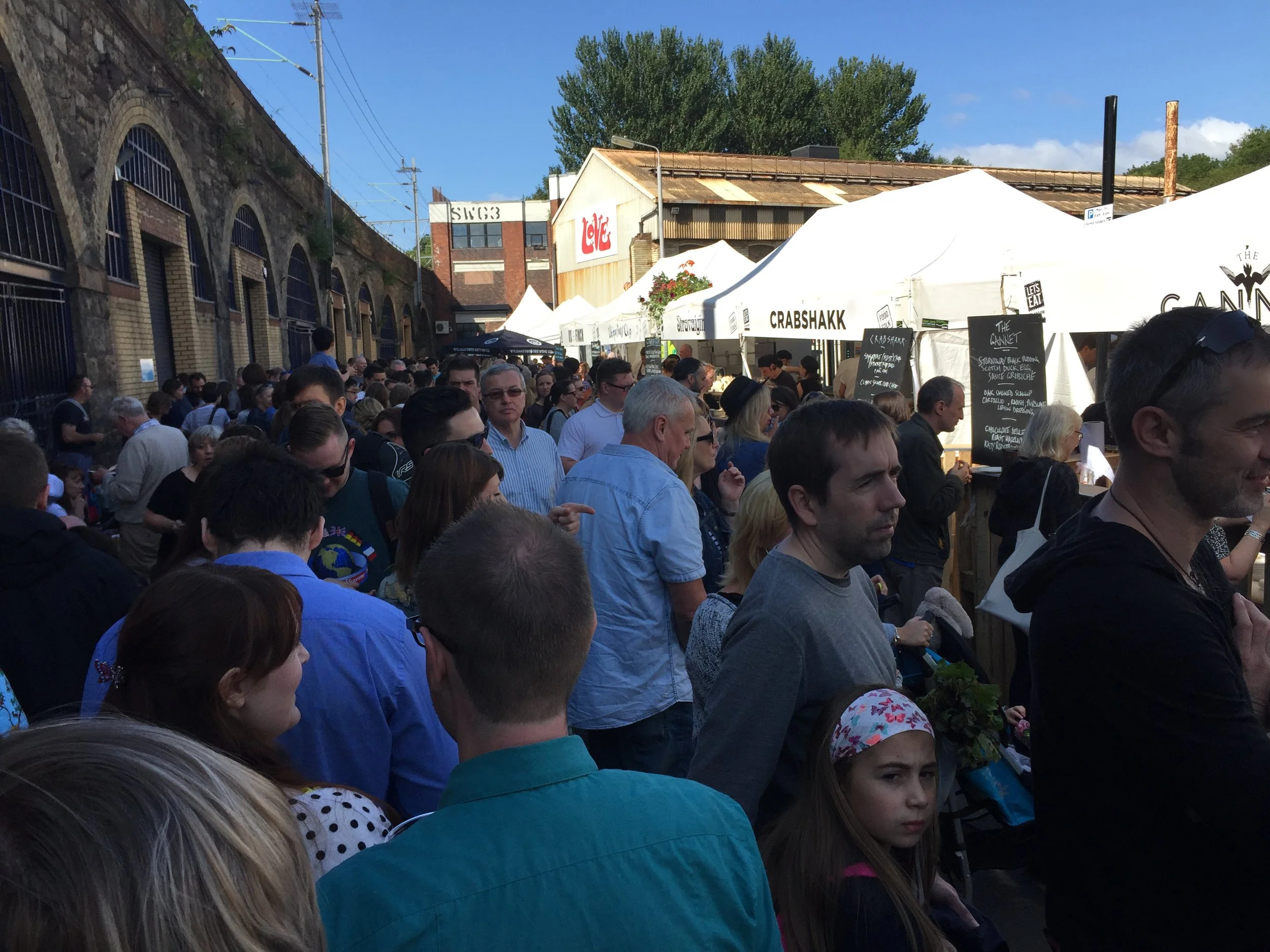
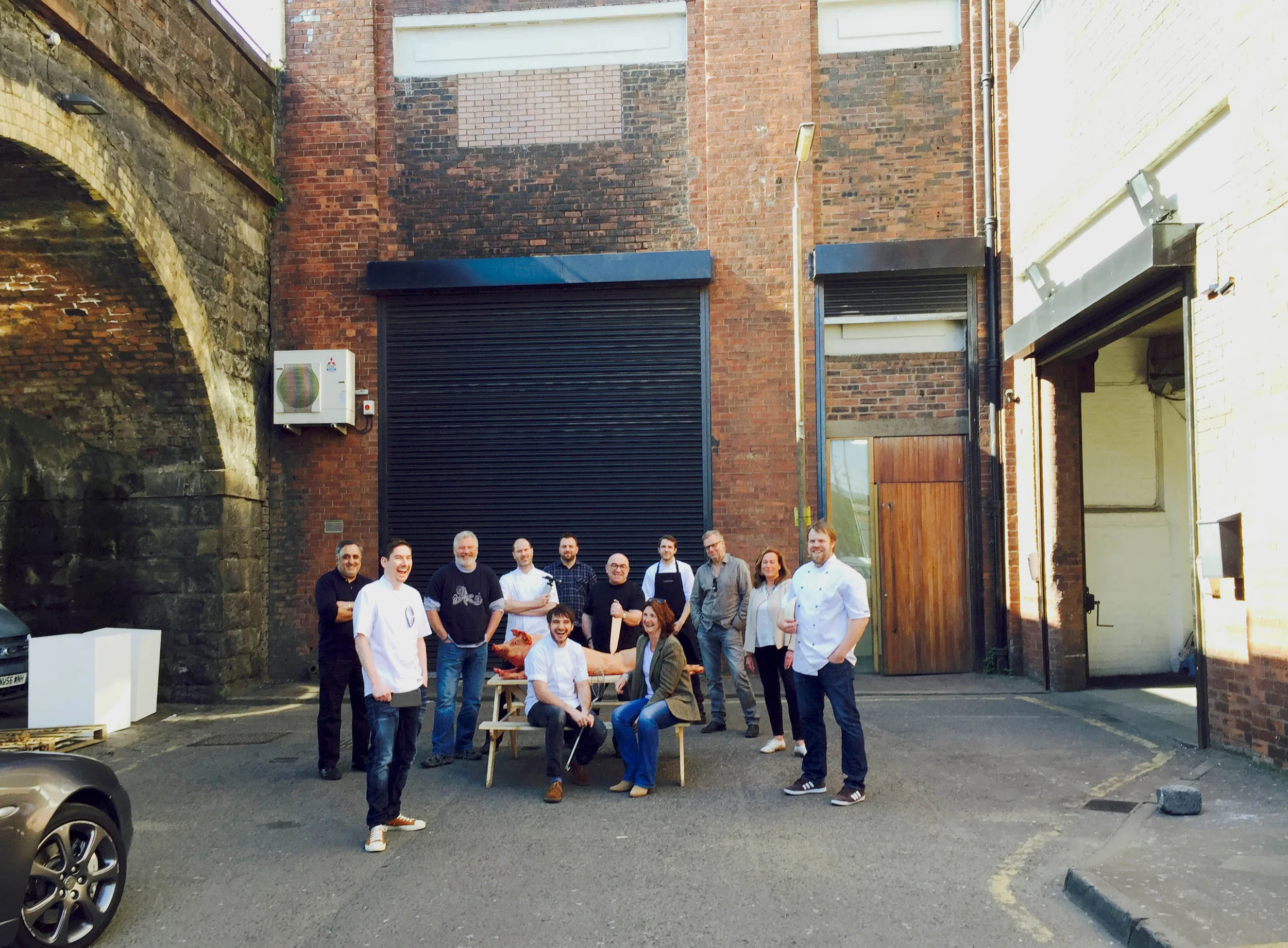
The buzz around Let's Eat Glasgow, the UK’s first not-for-profit pop-up restaurant festival and producers’ market which debuted over a September weekend in 2015, suggested the verdict was in the affirmative. Organised by Real Food Real Folk, a new co-operative of the city’s most progressive independent chef-patrons, its twin aims were to showcase Glasgow’s burgeoning food revolution while addressing issues of food poverty in the more deprived areas of the city, where health statistics and life expectancy are among the worst in Europe.
Of over 40 small food producers who attended the inaugural event, many were West of Scotland newcomers to the market scene, encouraged by reduced-rate stall fees; others were food-related social enterprises operating in the city who were given their stalls free of charge.
Eight restaurants were involved, and the venue was SWG3, a privately-owned 19th-century red brick former Customs & Excise tobacco warehouse on the Clyde waterfront at Yorkhill, partly used as artists’ studios. Admission to the festival was free, with small plates at £5 each cooked on site.
Cail Bruich, Crab Shakk, The Gannet, Guy’s, Mother India, Ox and Finch, Stravaigin and Ubiquitous Chip each devised their own menu of three dishes, advertised throughout the summer on social media. Punters were encouraged to purchase food vouchers in advance online to help with footfall on the day, and to give RFRF an indication of numbers. One thousand food vouchers were donated to food banks and social enterprises in the East End, Govan, Milton, Ruchhill, Shettleston and other deprived areas, for distribution to their clients.
RFRF’s desire to properly embrace social inclusion by inviting citizens from across the city – furth of the foodie-forward middle-class West End - to engage with good, healthy food was a bold and generous idea, perhaps typical of the big-hearted spirit of Glasgow, which is prone to holding public rallies in support of the underdog at the drop of a chef’s toque. Recent protests against the escalation of food banks in the city attracted thousands and George Square in the city centre was awash with bags packed with food donations.
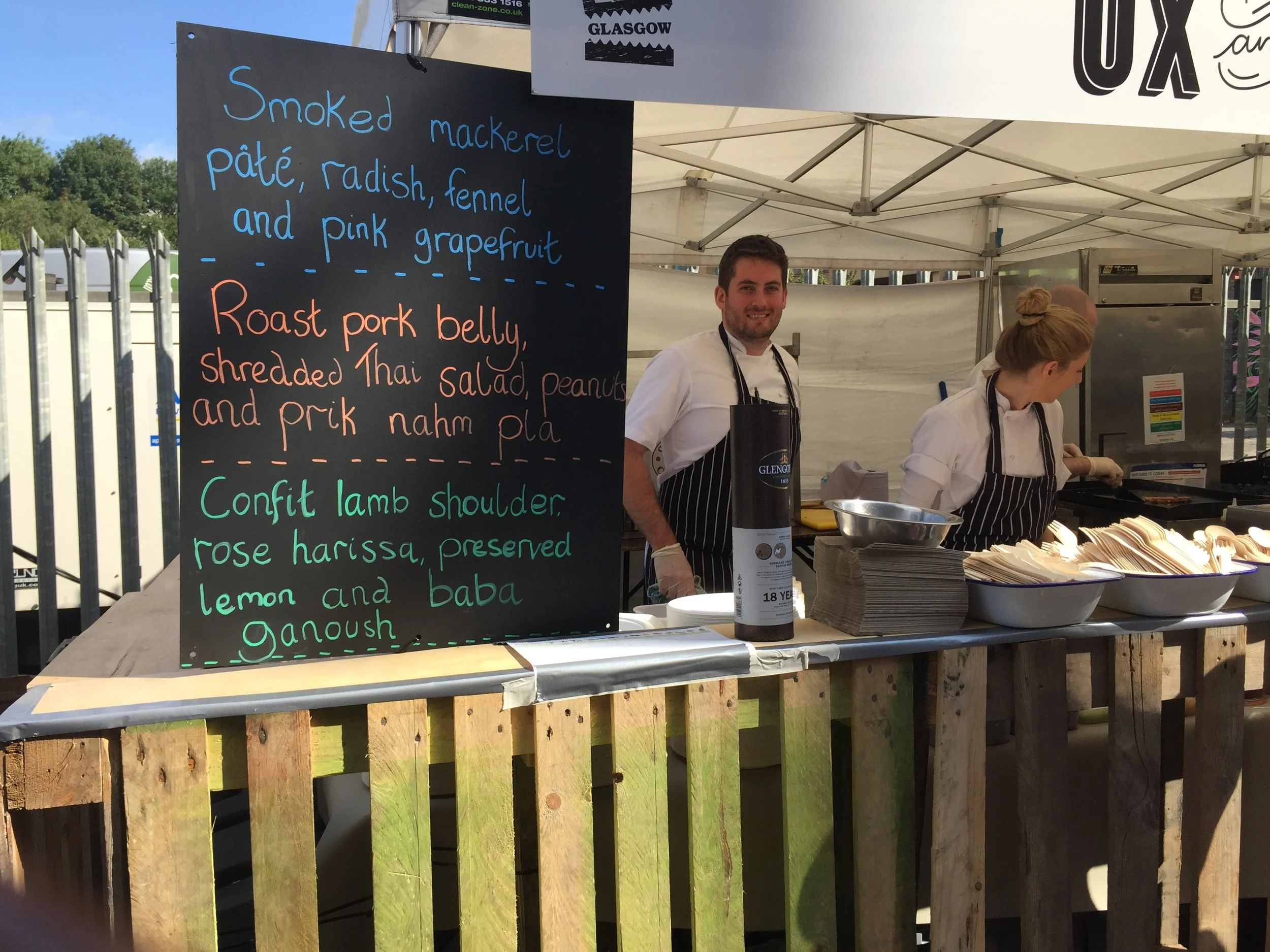
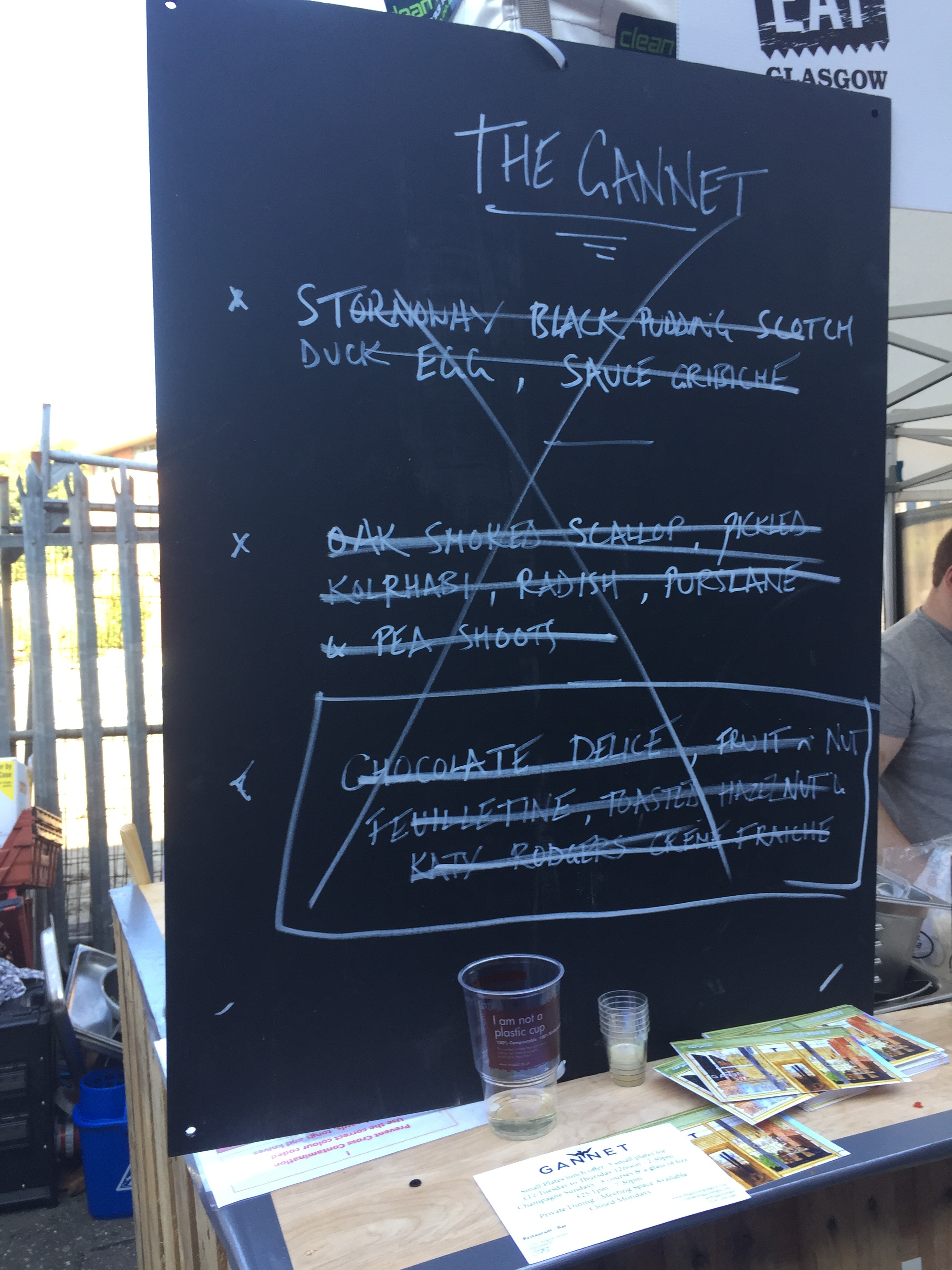
Cail Bruich’s Chris Charalambous put out a Loch Duart cold-smoked salmon with avocado smear, pickled cucumber balls and horseradish; ox cheek cooked in hay, with celeriac; and a crowdie by local dairy Katy Rodgers with elderberry and meadowsweet. Crabshakk’s David Scott put on signature crab cakes, a baked crab tart and spicy North Uist pincer end crab claw meat with sticky riceball. Peter McKenna and Ivan Stein of The Gannet had slow-cooked black pudding Scotch egg, cold smoked scallop and a dark chocolate delice; Guy Cowan of Guy’s had minced lamb with tabouleh in flatbread; and a trio of mini Scottish (as opposed to Scotch) pies of beef steak, haggis and clapshot, and smoked haddock with Cheddar. Jonathan McDonald and Andy MacSween of Ox and Finch offered lamb meatballs with hazelnut dukkah, fatoush salad and baba ganoush; roast pork belly with shredded Thai salad, peanuts and prik nahm pla; and home-smoked mackerel with fennel, radish, lemon and horseradish. Andy Mitchell at Stravaigin had roast ox tongue with tunato; venison and pork gyros, tzatsiki, Lochlibo Greek salad (using leaves from the restaurant’s allotment), and a Highland Cattle Tail doughnut – a humorous adaptation of the French Canadian Beaver Tail. Ubiquitous Chip put on Renfrewshire wood pigeon with barley risotto; monkfish and scallop carpaccio, consommé verde; and a platter of West Coast meats with pickled Ayrshire Chioggia beets, baby cucumbers, smoked mayonnaise and sourdough by RFRF member Stefan Spicknall’s Cottonrake bakery.
Flying by the seats of their pants
Even with such an impressive food offer, this inaugural festival was a step into the unknown. Collectively, the chefs held their breath and crossed their bandaged fingers. They could and did not forsee the resounding success that was to follow.
“We were flying by the seats of our pants, because this had never been done before and we didn’t have a clue how busy it would be,” is how Colin Clydesdale, Real Food Real Folk chair and patron of the Ubiquitous Chi, put it.
The plan was to stop online sales at 3800 to leave 1200 for sale at the door. That target was reached days before the festival started, as sales averaged one every two minutes.
Vouchers in the form of one plastic token per dish were exchanged for PayPal receipts at the door. Or in this case, at the faux farm gate: to get them in the field-to-fork vibe, visitors were greeted by a Highland cow and her calf, and a cage of free-range baby chicks loaned by Grierson Organics. (Environmental Health jitters meant having more livestock on site was not deemed possible.)
Initially, the chefs budgeted for 6000 plates between them, or around 750 each, to be served between Saturday from 11am until 8pm and Sunday from 11am until 5pm. Since the venue’s capacity was 7000, they reckoned on a throughput of between 5000-10,000 people over the two days. Prep was duly done at the individual restaurants and brought on-site on the Saturday morning – which turned out to be the first day of the sweltering Scottish Indian summer.
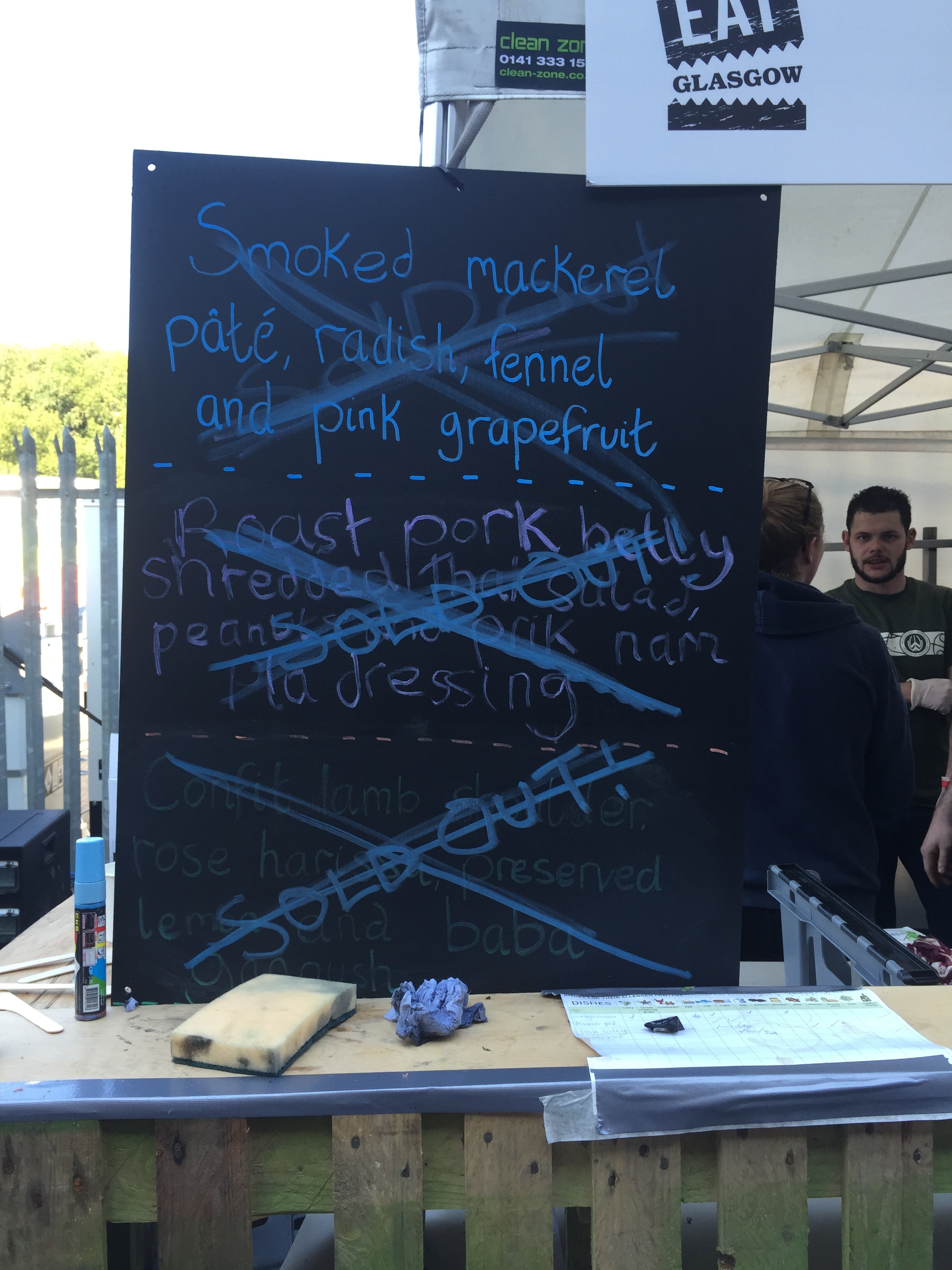
By 2pm on the Saturday, the place was rammed and alarm was mounting that some restaurants were about to run out of food. Clydesdale became the liaison point between them and their suppliers. Such was the rush that he put all orders on the Chip account, with the reckoning to be done at a later date. He said key suppliers such as Braehead Foods of Kilmarnock, Fresh Direct of Inchinnan, Renfrewshire, John Vallance fish merchants of Glasgow donated “tons” of food, and that they could not have managed without them, nor keep plates down to £5. Refrigeration and demo kitchens were also loaned for free.
By close of play on the Saturday, all restaurants had sold out. It meant only a few hours’ sleep on Saturday as more prep for Sunday had to be done overnight – and after evening service at the restaurants. The same thing happened on Sunday: menu boards had “Sold out” written on them by 4pm.
In the end, they served 10,000 dishes to 7000 people, releasing more 2000 extra vouchers both days. At least 750 of the 1000 donated vouchers were redeemed – not bad, considering SWG3 is in the West End and that vouchers did not include transport. (RFRF had wanted the former Duke Street cattle market in the city’s East End, owned by Glasgow City Council, but the logistics proved insurmountable.)
Ox and Finch served a total of 1350 plates. Some 750 of these were on the first day – around 350 more than they would do on a Saturday evening service at the restaurant. “That is an exceptional amount for this kind of food. We were busier than we’ve been at most street food events we have done, even during the Edinburgh Festival,” said chef-patron Jonathan McDonald, a former F1 chef who co-founded the city’s massively popular Street Food Cartel before opening his restaurant with general manager Andy MacSween in May last year (and attracting a Bib Gourmand within months).
"We could not have done this without our wonderful suppliers"
“We’d run out of all our Sunday food by the Saturday evening so we had to make the same again before 11am on the Sunday, while running Saturday evening service at the restaurant at the same time. We were having to persuade suppliers to drop off food at 8pm. They were magnificent, and donated tons of stuff. They really pulled out all the stops and we could not have done it without them.
“Not knowing the number of people who would turn up was a challenge. We had to pick a number from somewhere, and 6000 was our best guess. We didn’t want to get it badly wrong and be left with a load of waste. I’d rather stay up late and make another 750 plates than be staring at a load of waste.”
The Gannet served 550 Scotch eggs, 300 smoked scallop and 400 chocolate delices, a total of 1250 plates. “Even though we already knew the Scotch eggs were popular, we didn’t expect this volume,” head chef Peter McKenna told The Caterer. “We’re a very small team, so after Saturday service at the restaurant I was prepping for Sunday from 8am, and Ivan started at 3am. By the end we were all wrecked, but in a good way. We’re still feeling the buzz.”
It was a similar story at Crabshakk, which had served 500 crabclaw dishes by 3pm on the Saturday. “Finding more produce on a Saturday night for Sunday was a challenge, but then that’s part of the fun of a street food festival,” said head chef David Scott.
Guy Cowan ran out of pie shells after he’d served 1500 of his gourmet pies. He improvised, and discovered that Persian flat breads with haggis and Lebanese pickles work well together. Years spent as a film location caterer helped him think on his feet. “I went to the Chinese supermarket early on the Sunday morning and created new dishes. It wasn’t such a big issue for me.”
Would they do it again? Clydesdale is adamant. “Absolutely. We’ve proven beyond doubt that there’s a huge appetite for this in Glasgow. We’ve set a precedent. We have plans for more events in the pipeline and Real Food Real Folk is not going anywhere else.”
* This article first appeared in The Caterer, September 2015.