UPDATE: Cromlix has retained its 5-AA-Star status and Cradle fine-dining restaurant has been awarded 3AA Rosettes since I visited.
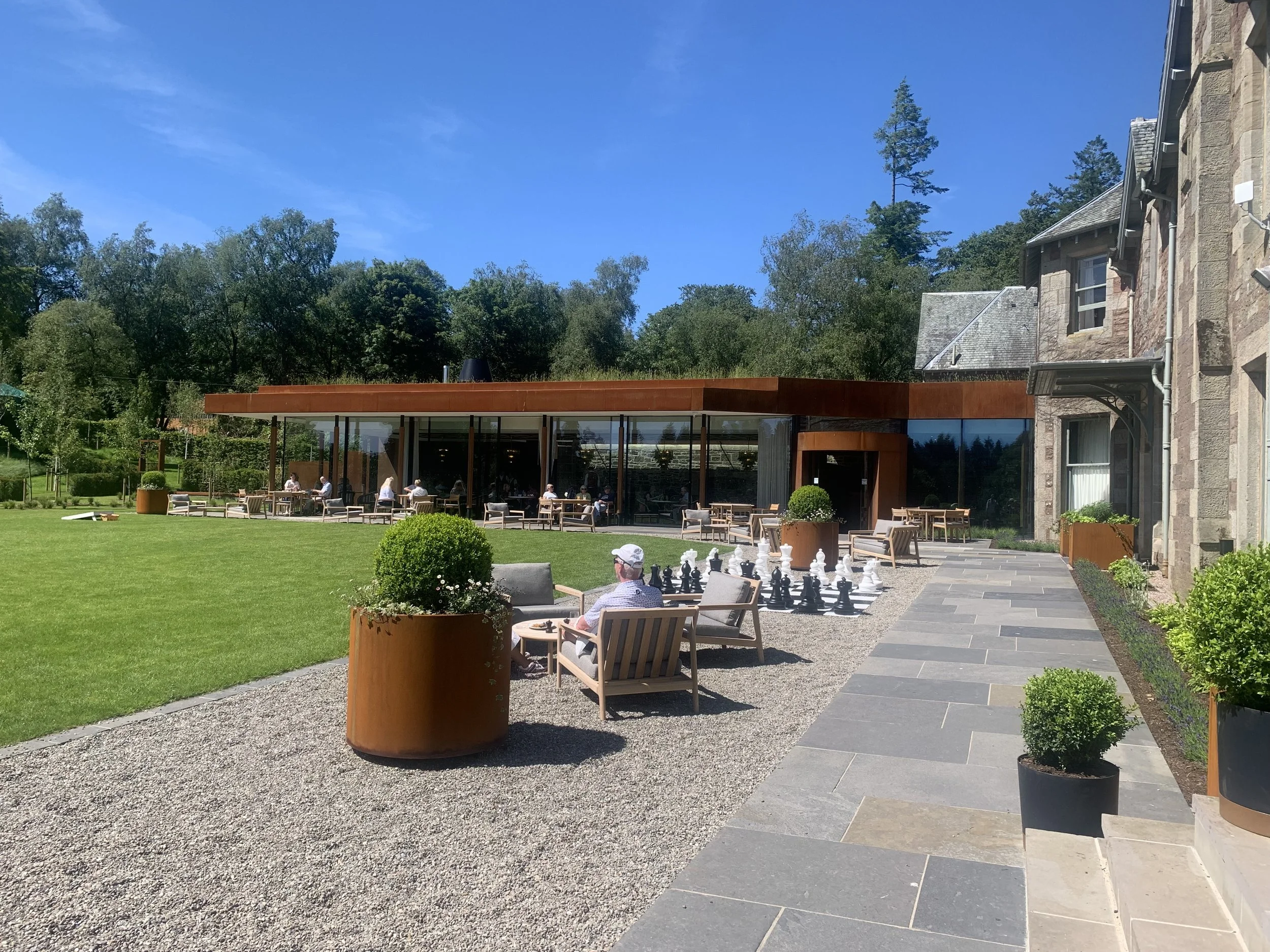
On just about the hottest day of the year so far, I revisit Cromlix, the Stirlingshire hotel owned by Andy and Kim Murray. It’s just re-opened following an extended closure for the building of a new extension with 60-cover Garden Room restaurant overlooking the lawn - and the creation of Cradle, a small 16-cover fine-dining restaurant inside the hotel.
I’m fascinated to see the bold new direction the hotel is taking in it stated aim for Michelin Star status [a story I broke exclusively last year in the Sunday Times], and to chat with executive head chef James Mearing and head gardener Kathy Beckett. The pair work closely together to create chef James' menus of “exceptional” fresh, local, sustainably grown produce and beautiful-to-behold dishes. Already the hotel and its existing Glasshouse restaurant have 3 AA rosettes for culinary excellence. Next stop: a Michelin Star for Cradle.
It appears the heat is on on two counts.
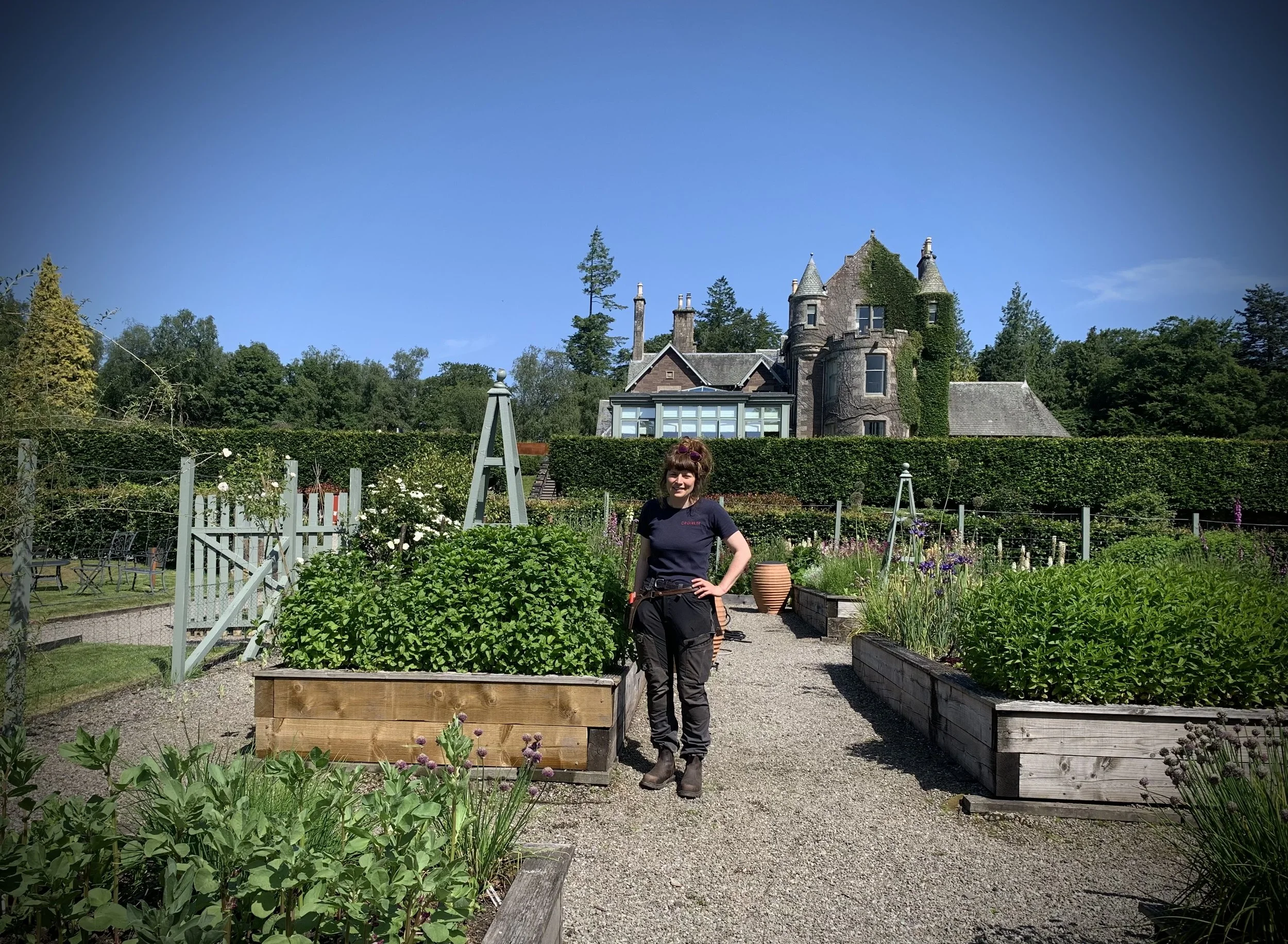
“We’re coping by adapting,” says Kathy as she swelters in the kitchen garden in front of the hotel. With recent temperatures nudging a record-breaking 30degC, care of the fruit, flower, vegetable and herb plants that feed the hotel kitchens, as well as the cut flowers for the hotel itself, is her pressing task. Her staff have been asked to begin work an hour earlier at 7.30am to catch the morning soil while it’s relatively cool and more able to retain water, and they finish at 3.30pm instead of 4.30pm so they themselves can avoid the worst of the heat.
The watering systems have been adapted and improved, with drip lines and soaker hoses, and a staggered, carefully organised watering schedule. “We have to be strategic about watering all plants - the fruit trees, vegetables and flowers - throughout the week,” adds Kathy.
I ask if she is looking to the future, should signs of climate change continue, she answers: “I’m sure we’ll get more of this in the future but I think we’ll still grow the same things, and just adapt our practices, perhaps by growing more vegetables outside, and switching from annual flowers to perennials as they are more resistant to heat.” She mentions quinoa being grown down South as a indication of future possibilities.
“I hope it won’t be too long”: chef James Mearing on hosting the Michelin inspector
When I meet with chef James I can’t wait to ask if the Michelin inspectors have been yet: Cromlix was awarded a Michelin Key last year which means its inspectors would be calling. “It’s difficult to tell as they don’t announce themselves,” he replies quietly, adding: “But I hope it won’t be too long.” The Michelin Awards ceremony usually takes place in February and chefs of restaurants in line for a first or new Michelin Star are invited in late autumn. Dates for 2027 have yet to be announced.
It’s a nervous wait, but meantime chef James and Kathy are wdong the best they can.
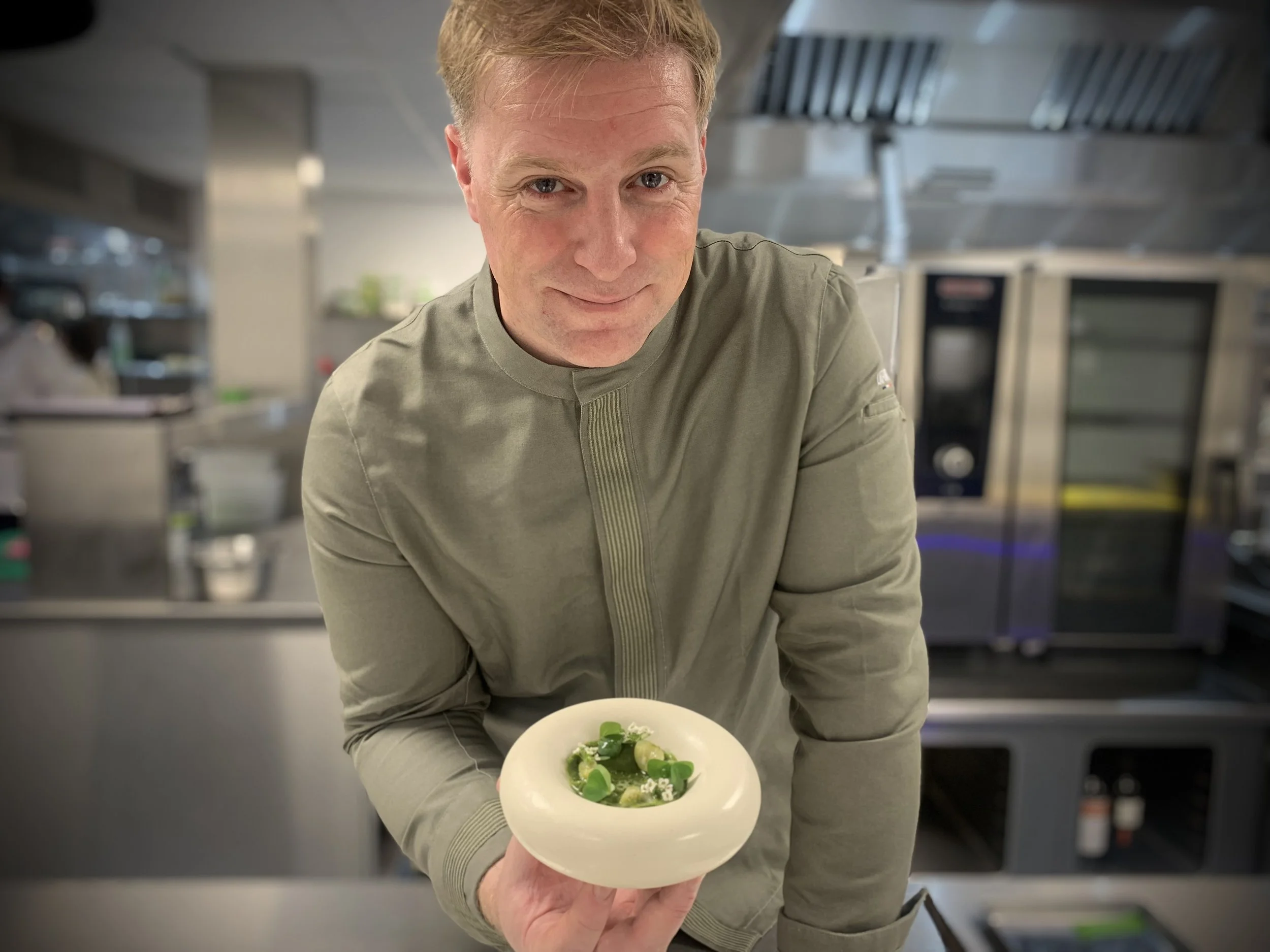
Kathy and her team built the Gourmet Garden polytunnel, where the most “exceptional” baby vegetables, flowers and micro greens are grown. “What’s important is that the tasting menu [at Cradle] starts here,” says chef, who chose his fashionable green chef’s “white” jacket to chime with the hotel’s natural, organic ethos.
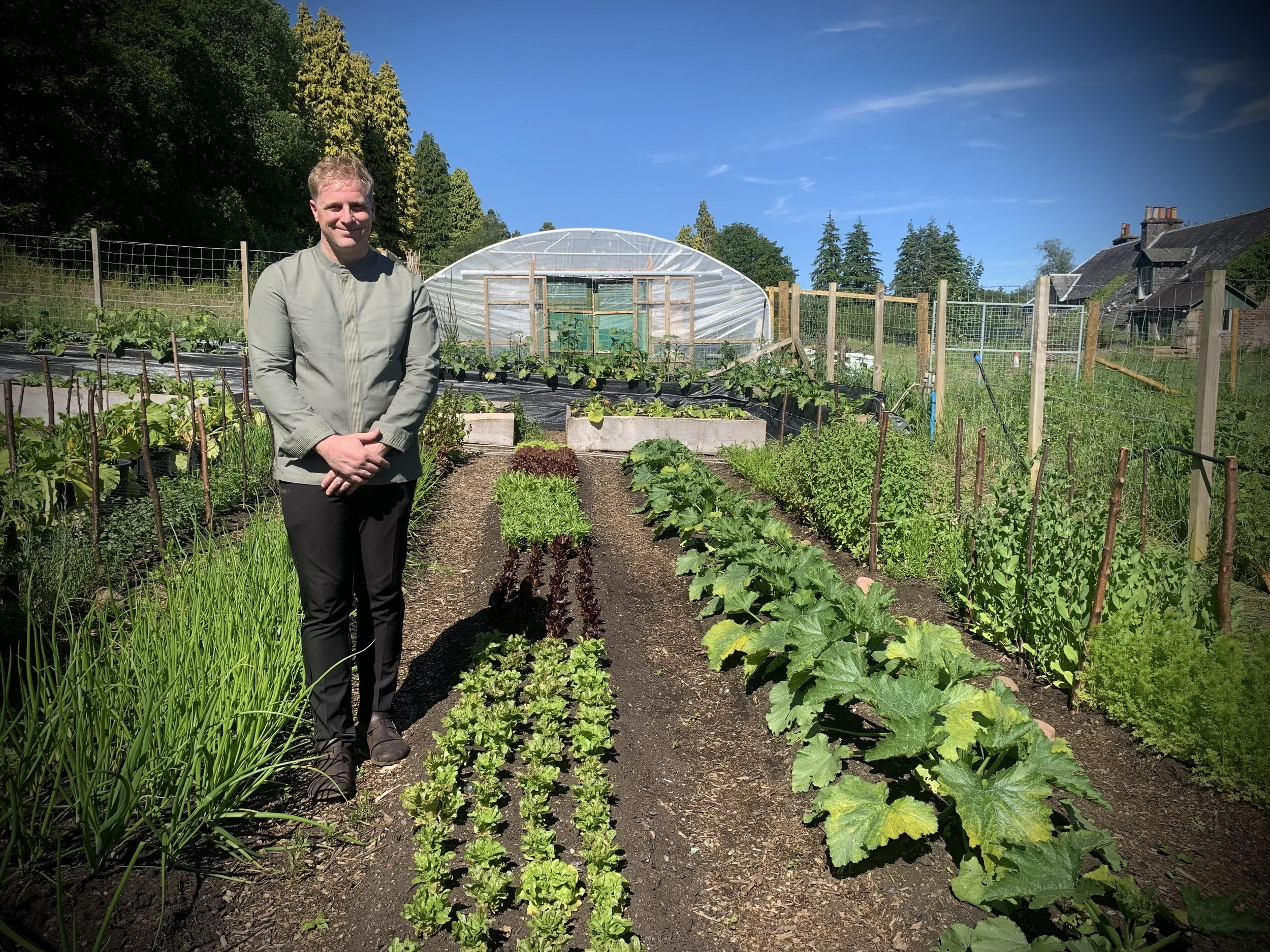
“Sustainable succession growing to ensure my ingredients are as fresh as possible is what we believe in, so we’re planting and harvesting in sequence,” he adds. Butterfly sorrel, Blauschokker peas, three types of heritage tomatoes, baby courgettes, tiny carrots are being grown here “for the plate rather than the pot”. Visual appeal is key for chef. When I spot some chickpea shoots growing among the thousands of micro-herbs in the gourmet garden poly tunnel he says simply: “I like the structure of the leaves.” He’s also a fan of the coconut-pineapple notes in gorse flowers.
He oversees the menus for both new restaurants - Cradle, under head chef #Murray Cooper, and the Garden Room - according to this central ethos of great produce prepared, cooked and presented well. Cradle’s tasting menu is where he aims for gastronomic excellence, while in the Garden Room the larger menu and service is more relaxed with a choice of dishes. “For some diners, tasting menus can be too contrived and too ‘out there’,” he says.
“At Cradle my focus is on presenting a great story on the plate. I want guests to identify with what we’re doing with beautiful produce freshly sourced from here at Cromlix and from around Scotland.
“We have a course at Cradle of crudités and kombucha that for me encapsulates what we’re doing here. Produce in its natural form, no masking, no hiding it with sauces and so on.”
When I visit, ingredients include a dizzying array of garden allium, asparagus, rhubarb, salsa verde, versus, kohlrabi, garden peas, turnip, gorse, artichoke, cabbage, dill, carrot, courgette and Cromlix honey.
He is using rose petals for a rose kombucha to follow on from his early season gorse and elderflower kombuchas, and a strawberry vinegar and miso from strawberry tops. Whole-plant is as important as whole-animal. (Lamb, chicken, venison and beef are equally well-sourced and celebrated.)
To illustrate this ethos, we’re in the new state-of-the-art kitchen, where there are two passes - one for each restaurant. Chef prepares for me some of his snacks at Cradle. All three are absolutely beautiful to behold: a rounded ceramic bowl slicked with a thick layer of cool kitchen garden herb sorbet with Scottish gooseberry amazake is garnished with pickled gooseberries and citrussy foraged sorrel then dotted with olive oil to create wee bubbles; a coin-shaped nasturtium financier dusted with yuzu kosho and decorated with tiny garden allium petals, and tastes peppery-spicy with a satisfying grassy bite; and an elderflower kombucha warmly floods my system with what feels like a cleansing dose of VitB.
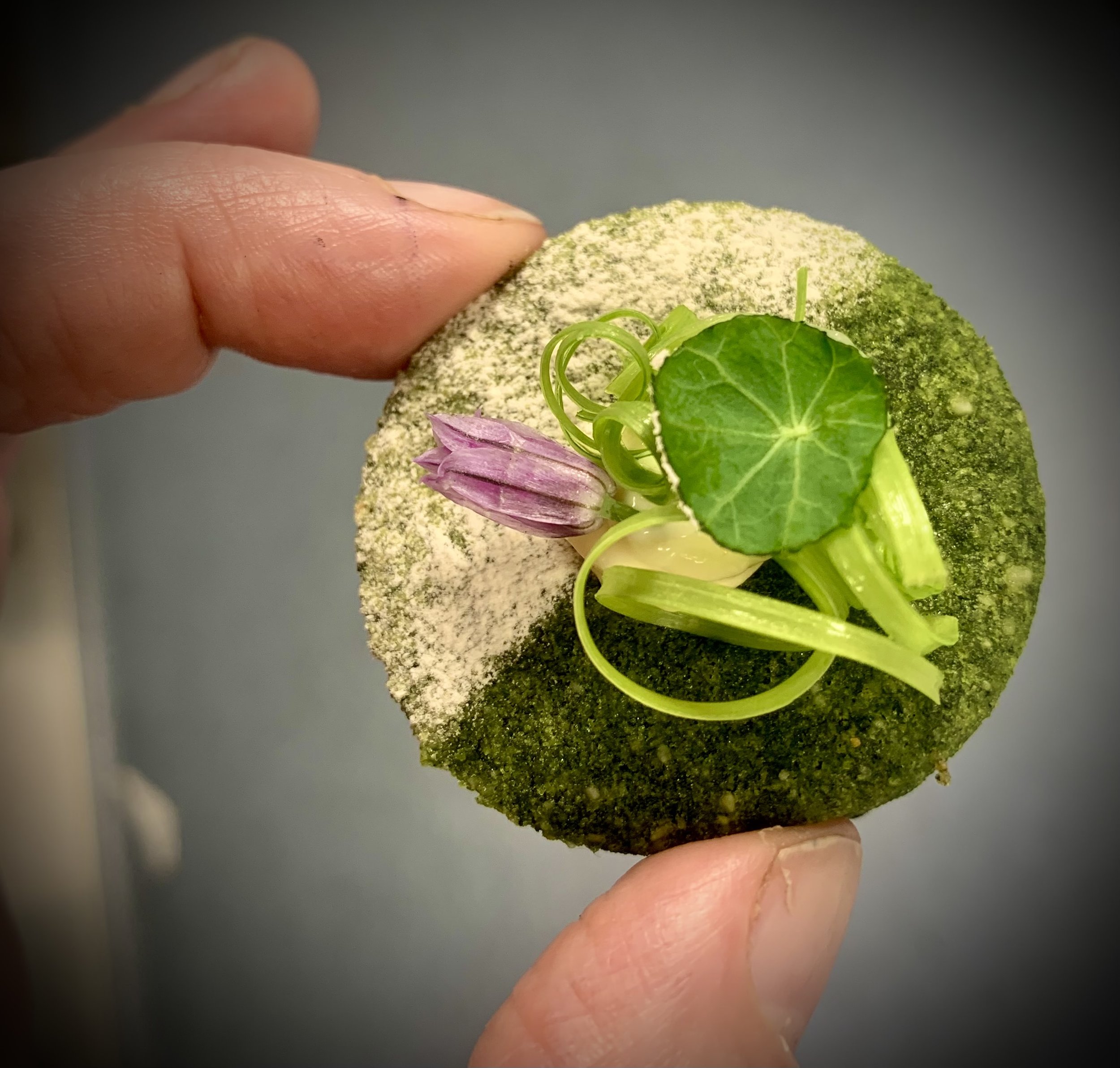
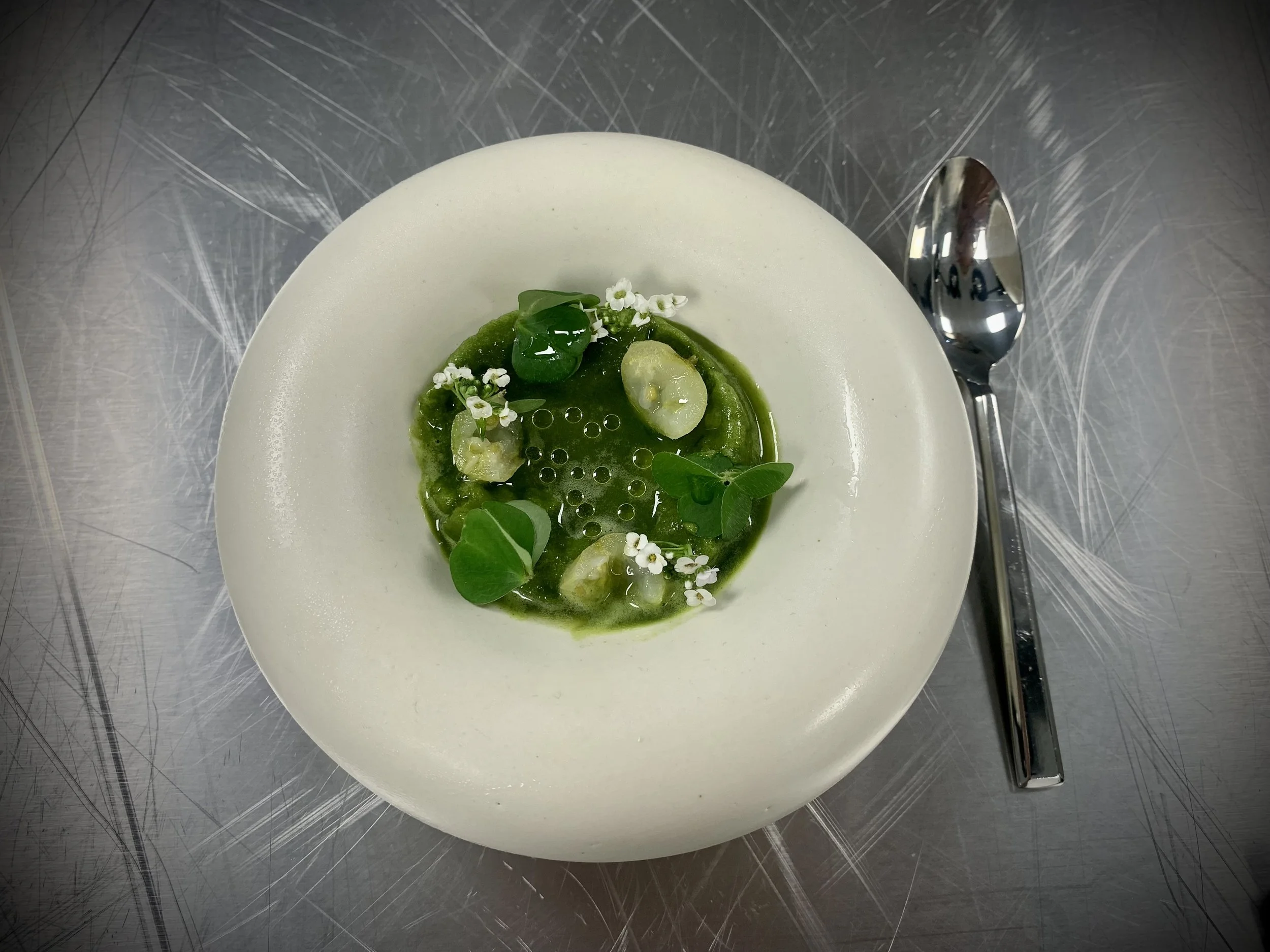
Chef says: “I feel this is the real expression of what we’re about - fresh, beautiful ingredients, depth not spectacle - and they set the tone.”
Across now to the stunning weathered steel clad Garden Room, whose floor-to-ceiling windows overlook the lawn, the Douglas fir and copper beech and newly-planted fruit trees. It’s built out from the house along the original wall of the 1874 walled garden, which is exposed in all its sand-blasted glory.
Steve Strachan, food and beverage manager, greets me warmly as I enter the Garden Room via the bar. The service that ensues is impeccably amiable and professional. The number of front-of-house staff is notable and Steve tells me food and beverage staff has increased form nine to 50, and total covers over all restaurants from 50 to 150 a day. Chef James has a brigade of 18 chefs and nine kitchen porters.
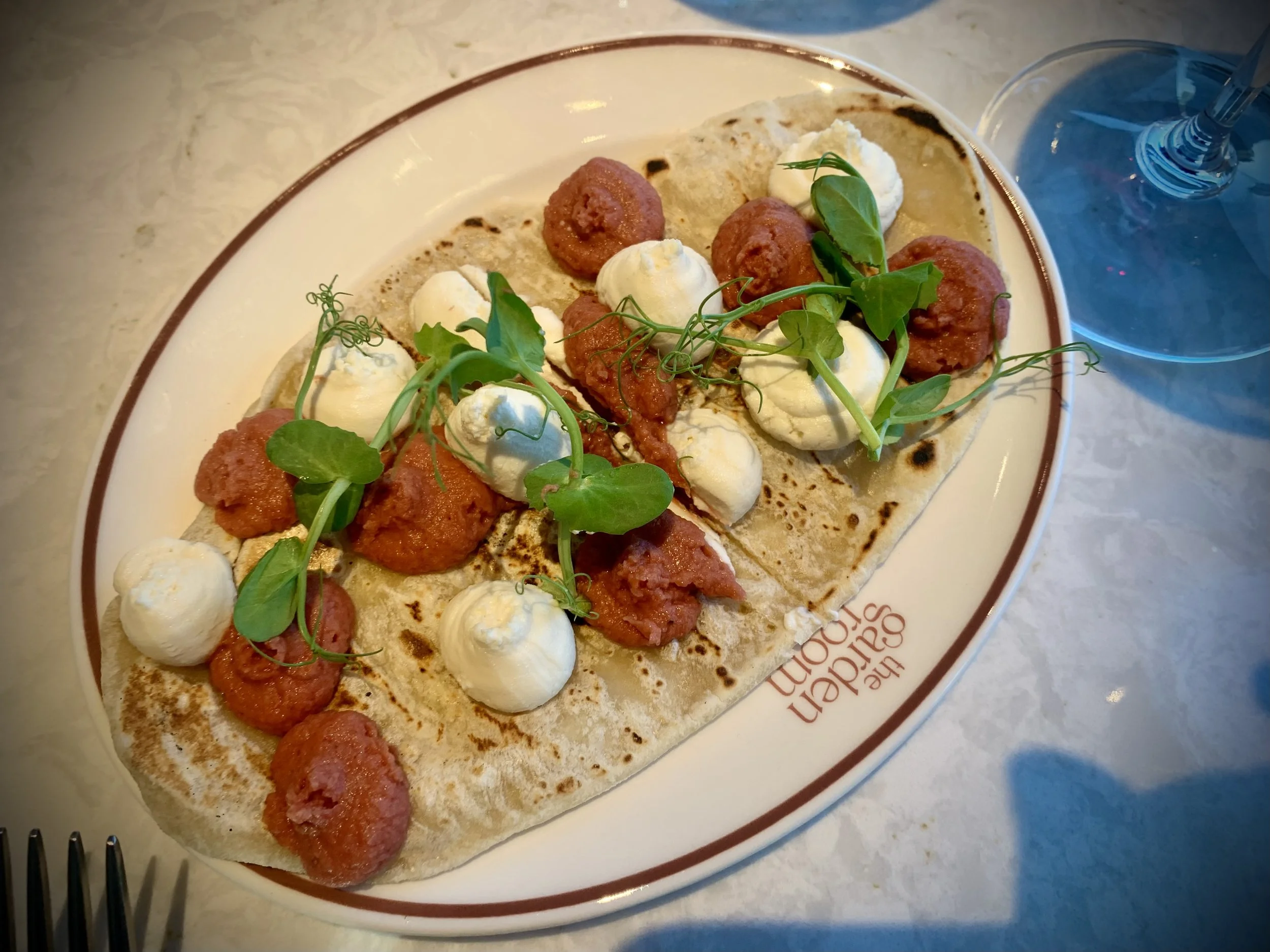
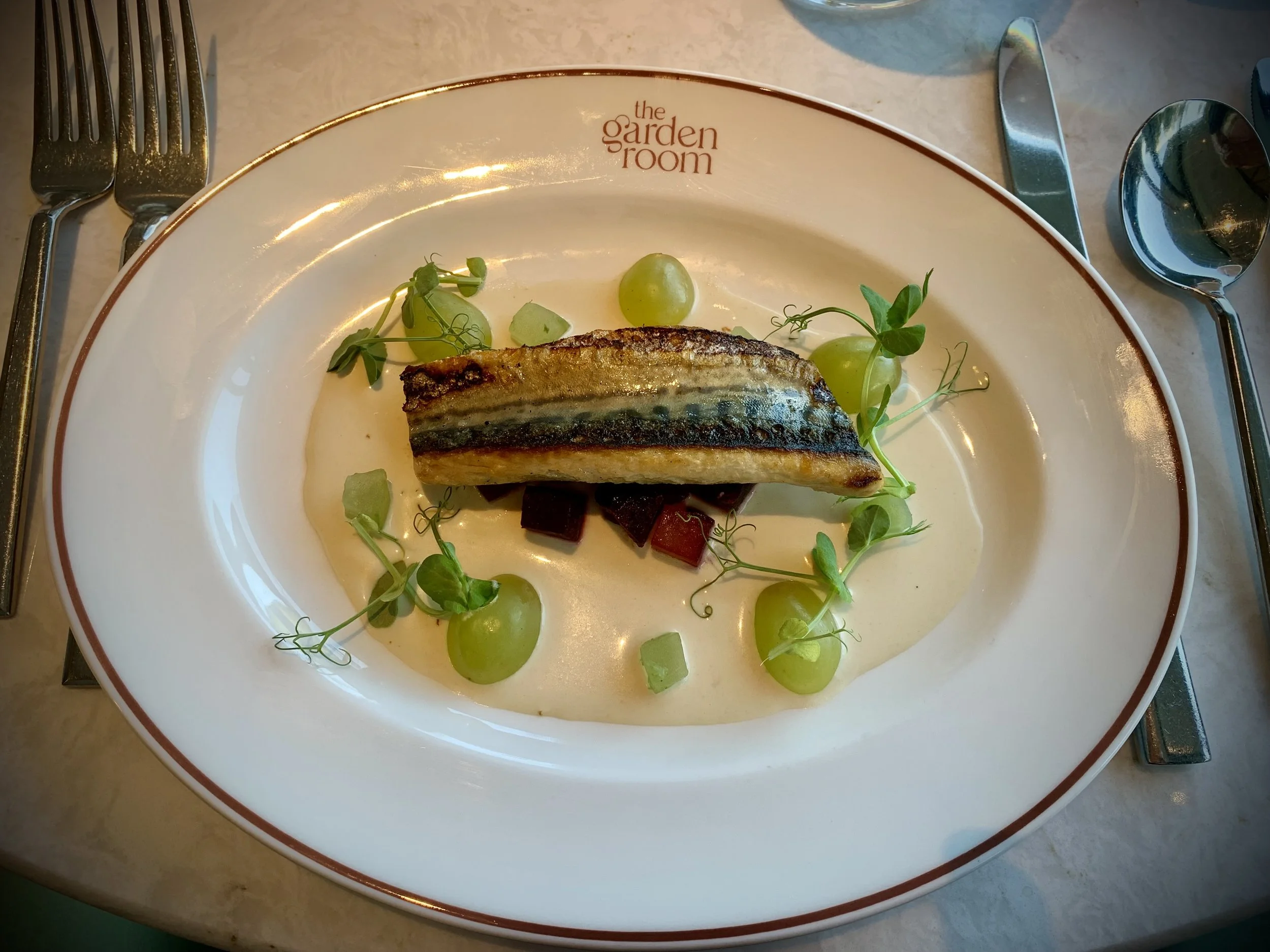
An earthy beetroot hummus snack is extremely pretty and generously proportioned. Dotted atop a salty rosemary flatbread, and topped with fresh pea shoots, it’s a great start to my meal. And a Scottish brown crab crumpet with fine herb salad is equally generous, the thick crumpet well able to absorb its creamy, briny dressing. A starter of BBQ skin-on mackerel has a smoky edge that doesn’t mask the intrinsic flavour of the fish or a delicious ajo blanco (a sort of white gazpacho) sauce topped with white grapes.
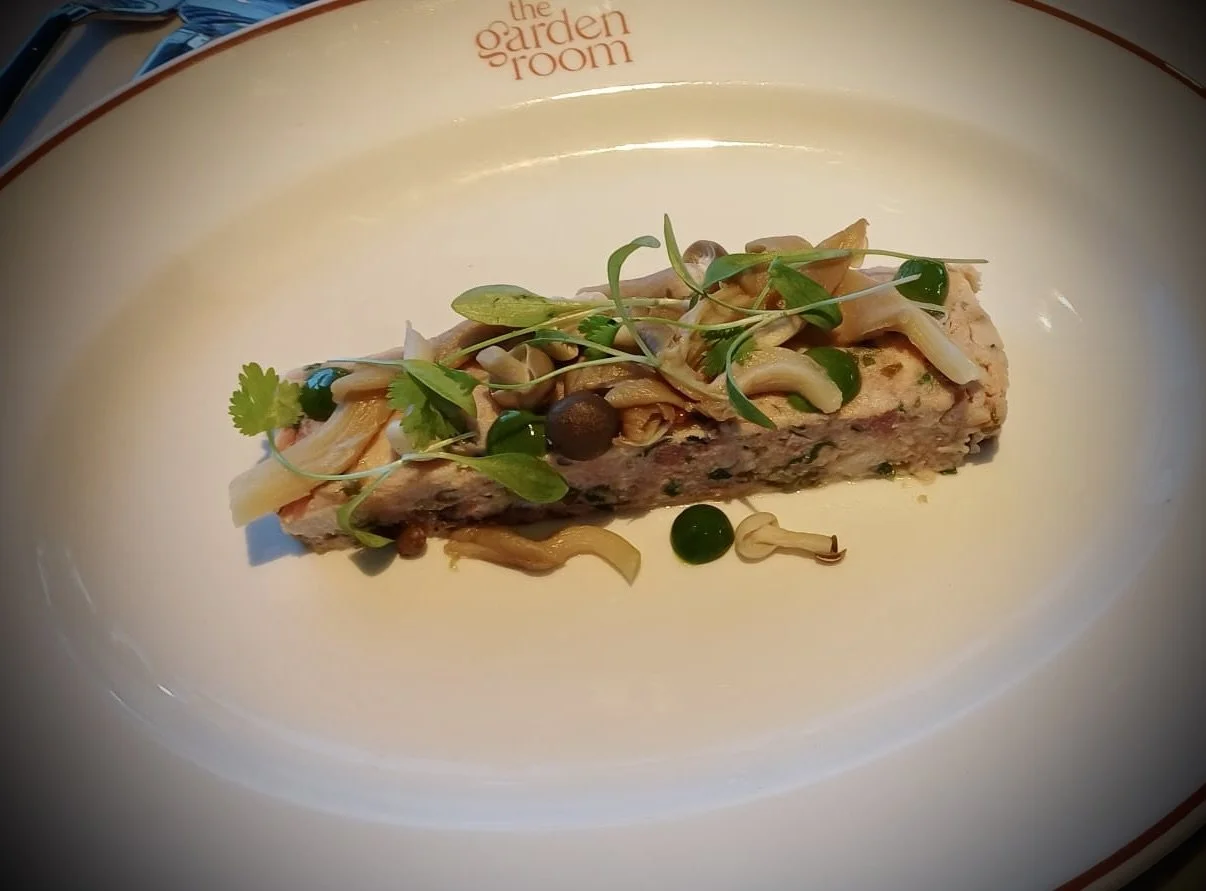
I choose a Tranche of Scottish Wild Turbot with dashi beurre blanc and walnut oil - a highly sophisticated dish that delivers beautifully soft delicate flakes with a gently acidic hint from the sauce. My companion’s St Brides Chicken Breast is rich in natural flavours, the texture enhanced by a thick slice of hen-of-the-woods. We share a fresh in-season Scottish strawberry pavlova with elderflower to finish, its meringue tower crumbly and not overly sweet.
As the summer evening light falls across the pristine lawn, my experience here feels sun-kissed and joyful.
And though the heatwave has now broken, the residual warmth is a reminder that hope is on the horizon.
* Cromlix Hotel, Kinbuck, Near Dunblane, Stirling, FK15 9JT (cromlix.com).