"I get the feeling Scotland is on the cusp of a gastronomic explosion of ideas and talent that it hasn’t had before”: New York chef Paul Liebrandt in Glasgow

"I get the feeling Scotland is on the cusp of a gastronomic explosion of ideas and talent that it hasn’t had before”: New York chef Paul Liebrandt in Glasgow

Chefs Paul Liebrandt (left) with Graeme Cheevers at Unalome as they start prep on next week’s eight-course four-hand dinner

Paul Liebrandt can’t keep his eyes off a fresh delivery of XXXL langoustines from the Kilbrannan Sound and North Uist as they kick and twist in their boxes. The renowned chef has just arrived direct from New York at Unalome, the recently Michelin-starred Glasgow restaurant owned by his old pal Graeme Cheevers, where they’re cooking an eight-course four-hand dinner in three days’ time (May 9 and 10, 2022). Despite what must be a bit of jet-lag, he’s alert to the task ahead – and already seems to be loving what he sees.

“These are just phenomenal,” he says dreamily as he appraises the hyper-local super-fresh shellfish, his expert eyes also taking in a massive fresh turbot as it is deposited on the counter by supplier John Vallance. “You guys are truly blessed for the quality of your seafood, your langoustines, scallops, white fish. To me, it’s this that makes Scotland part of the global gastronomy movement.” A tantalising subject to which we will return later.

Right now, time is of the essence. New York-based Liebrandt – the high-energy star of the film A Matter of Taste who trained with Marco Pierre White, Raymond Blanc and Pierre Gagnaire; has two restaurants in Bangkok, one under construction in Miami and plans another in New York; whose former restaurant Corton gained two stars in the New York City Michelin Guide within months of opening; who now runs his own consultancy Crumpet Management; and whose cooking has variously been described as “outre”, “exciting” and “daring” – has been invited to cook at Unalome by long-time friend Cheevers, who earlier in his own stellar career did a stage at Liebrandt’s The Elm restaurant in Brooklyn.

Liebrandt’s presence in Glasgow, which he has never visited before, has created quite the stir: the special two-night event, at £400 a head including paired wine, was booked out within two hours. As result which prompts Liebrandt to declare: “If anything, this is undercharging because for what you’re getting makes it actually very reasonable.”

Chef Cheevers says simply: “Working with chef Paul is good for my staff, it’s a  new experience for them and I’m sure they will gain from it. It’s also good for Glasgow to get a taste of high-level New York gastronomy without having to travel.”

For his part, Liebrandt’s admiration of Cheevers is expressed thus: “He’s very focused, organised, thoughtful, disciplined. That’s the way to be. The shouty bully-boy head chef is yesterday’s hero.

“I trained in that environment. I never really enjoyed that side of cooking because it didn’t bring out the best in the team. Thankfully that’s in the past.”

Chef Paul at his former Brooklyn restaurant The Elm, where Graeme Cheevers staged (Photo ©GQ.)

We grab a moment to chat over super-strong espresso. Chef Paul opens a thick black folder and we scan its contents: meticulously itemised ingredients for each fish dish he will be responsible for (chef Cheevers is doing the meat courses because chef Paul “wanted to work with Scottish seafood”), intricately detailed prep instructions, and finally the recipes, explained step by miniscule step.

The bespoke menu is typically tight-lipped, but imparts just enough to hint at deep complexity and high creativity. One dish is Langoustine Harlequin.

“There’s a lot of detail,” he says. “For this there are two different preparations of langoustine: grilled over white Japanese charcoal then wrapped in saki gelee. I’m using natural colours of beautiful spring green garlic leaf, white coconut milk, red wine with hibiscus.”

Turbot will be served with scallop farci, fraise de bois and goat milk Chantilly.

He says he has “no idea” how many ingredients are involved. “Each dish is focused on one ingredient and it’s the story of that ingredient. It’s not complicated, but it’s graphic.”

Presentation is paramount, for its leads to other things. “We eat with our eyes. Flavour and memory are the most important.”

“Graeme and I have created a menu for guests according to place, and the time of year. When he worked with me at The Elm, Graeme used local ingredients. It’s about respect. I want to support the local fishermen and producers.”

He rebuffs my question about technique. “I hate the term,” he says. “When you sit down to a meal, it’s to a story that we’re telling. It’s for us to tell you the story. Food is the only industry where we use all of our senses – look, taste, smell, etc – then you just know when it’s something special. It’s a bit like being in love. Also, it’s the only industry where we put something inside ourselves, where we put our work inside us.”

Both chefs agree that hospitality is one industry that has not changed dramatically, unlike others such as private dentistry where clients are willing to pay the highest prices for a half-hour appointment.

“Our is a high-energy industry. You can’t automate it; it takes a lot of skill and experience to get all the gears to move at the same time,” says chef Liebrandt. “No mechanism can do that for you; it’s hands-on manpower. That hasn’t changed ever. So it’s about economies of scale.”

Chef Liebrandt attended Westminster college and initially intended to follow his father’s footsteps and join the military, but changed his mind and left at age 15 to work at commis chef at the legendary l’Escargot in Greek Street in London’s Soho, where he remembers learning to make Pommes Dauphine filled with orange confit.

Was it difficult? “I don’t remember – I had nothing to compare it to at that age,” he says, adding: “I learned from my father that if you’re going to do something, do the best you can do and be the best you can be,” he says. “I really enjoyed food and cooking, and decided that I wanted to compete at the highest level.

“It's not easy; this is a really hard business, tough and very unforgiving.”

He’s happier to discuss influences on his cooking. “I do enjoy South-east Asian, yes, and Nordic, but my training was French. French is the basis of global gastronomy. That is something I will say, and I will not not say it ever,” he says.

What does he reckon is the next thing in global gastronomy? “People are more knowledgeable about food, and after being cooped up for two years are more open to trying global influences on food.

“There’s always going to be a cuisine du jour: Ferran Adria at El Bulli in Spain redefined gastronomy through the lens of Spain, Rene Redzepi at Noma through the lens of Scandinavia. Mexico, Korea, are steeped in their country’s history. And younger chefs are interpreting that.”

And Scotland? “The lineage in Scottish talent is strong. Andrew Fairlie, plus others like Graeme and Tom Kitchin travelled the world to hone their skills and came back, being amazing ambassadors for their country. The next generation learned from them and now young chefs are staying here and cooking through the lens of their own country.

“Scotland is one of those places where you have the feeling it’s on the cusp of a gastronomic explosion of ideas and talent that it hasn’t had before.”

In the kitchen behind him, phones are ringing, urgent messages are being whispered and the buzz of creative chaos is building. Chef Cheevers is keen to get on with the setting up of an off-site prep kitchen to allow for normal service in the restaurant. Before we part, Chef Paul says: “There’s always going to be the next thing. I just focus on making people happy through sentiment.”

ENDS


Native Angus beef takes on world-famous Wagyu - in Hong Kong

A Forfar farmer is set to turn the tables on Far Eastern Wagyu with the first export of Native Angus beef to Hong Kong’s top food hall.

A ribye cut of rare Native Angus, grass-fed and beautifully marbled, from Geordie Soutar of Dunlouise farm.

When the meat from a two-year-old Forfar-raised native black Angus steer named Jipsey Wallace - raised by Geordie and Julia Soutar of Dunlouise Farm in Angus - went on sale this week at Hong Kong’s upmarket city’super food hall, gastronomers in the Far East got a rare bite of Scotland for the first time anywhere in the world (apart perhaps from Edinburgh, where a small tasting event was held last year in the St James Quarter).

At city’super a choice of various cuts of Native Angus beef - including steaks, flank for stir-fry, and even beef sashimi - are set to be displayed alongside the world-famous grain-fed Wagyu beef originally from the Far East, which is widely celebrated for its fatty marbling and melt-in-the-mouth texture.

I think this is a fascinating development even if you’re not necessarily into agriculture, farming and even consuming beef. Original Native Angus a new-to-market Scottish product that has crystal-clear provenance, is more environmentally sustainable, and it also meets a growing movement away from grain-fed meat, especially with the soaring price of imported grain for animal feed. Apart from that, I like the idea that it’s going head-to-head (or horn-to-horn) with the world-famous and expensive Wagyu (pictured left), which is fed on grain.

Unlike the better-known and ubiquitous Aberdeen Angus, Native Angus contains no imported bloodlines, is finished only on grass as opposed to grain, and is descended from the original 19th century breed native to Banff and Angus in the 1830s. By contrast Aberdeen Angus is one of the most famous beef breeds, developed originally from the slow- maturing, black, horned cattle of Forfarshire (now the county of Angus) which were crossed with other breeds.

The Angus was widely exported during the 20th century and there are large populations of the breed abroad particularly in the U.S.A, Canada, Australia, New Zealand and South America. Many of these animals have been imported into the UK and widely used - thus endangering the original Angus population.

In fact the entire Native Angus breed was facing wipe-out until 1995, when Geordie Soutar of Dunlouise farm in Angus saved it from extinction.

Geordie Soutar, who recently received an MBE for his efforts in keeping and maintaining a global genetic pool of Native Angus, said: “This is a new venture for us and I think it is absolutely tremendous. So far we’ve been very hi-tech, exporting semen and live breeding animals in our bid to establish the blueprint of the breed.

“But this is pretty unique because it’s the first time the meat from a steer with full Native Angus pedigree will have been exported and go straight to retail.

“It’s not supermarket beef; this is a premium retail product more expensive than normal meat. The beast has never left the farm in its life and has never eaten cereal. It’s healthy beef that ticks all the right boxes in terms of clear provenance and environmental benefits as well as fantastic flavour.

“Jipsey Wallace is bred slightly fatter with more marbling as is beef sold in Asia. I would think at dity’super they will probably sell it as thin slivers or cubes to be served with rice. It will be very interesting to see the reaction in Hong Kong. If the feedback is positive we have two more steers in the pipeline to send. 

“It tickles me to think that we’re now sending Native Angus beef to Wagyu country.”

Andrew Duff of MacDuff speciality meat wholesalers in Wishaw, who sold the Native Angus beef to city’super via a Scottish food exporter to Asia, said: “This is a really significant move, the next step of a truly grassroots movement.

“It is another key moment in the breed’s regeneration and resurgence. It means that the original Scottish bloodlines are coming into a major emerging global market.”

Jipsey Wallace with Forfar farmer Geordie Soutar MBE and his wife Julia.

ENDS


Meet the team stepping up to the plate to save the planet one dish at a time ahead of COP26

Exclusive

Hundreds of COP26 attendees from around the globe are expected to descend on Glasgow next month, and are already booking tables at hospitality venues whose menus prioritise hyper-local, high-welfare, ethical and sustainable food and drink experiences from those independents not tied to the central buying policies of the larger hospitality groups. In other words, they are thronging to exactly the venues participating in the Plate Up For Glasgow campaign launching on October 12 and running throughout COP26. Read on …

[Pictured below are the team behind the progressive pilot campaign: L-R Rebecca Ricketts, Campaign Lead for Plate up for Glasgow; Craig Martin, Experience Glasgow; Giovanna Eusebi Eusebi Restaurant and Deli; Alison McRae, Glasgow Chamber of Commerce.]

Plate up for Glasgow - speakers.jpg

Fancy a sour beer made with surplus supermarket bread and parts of fruit and vegetables that normally go unused, blended with small-batch home-grown hops? It’s being made by the innovative Drygate Brewery in Glasgow and when ready it’ll be given the brilliant name of Spare Parts. The new sour will be served at Drygate, together with a zero-waste menu, during the inaugural Plate Up For Glasgow pilot food waste campaign launching on October 12 and running throughout COP26, the UN Climate Change Conference, until November 12 inclusive. The beer will be kegged and given free to 35+ participating restaurants, cafes and bars city-wide in return for donations to the Trussell Trust food bank charity.

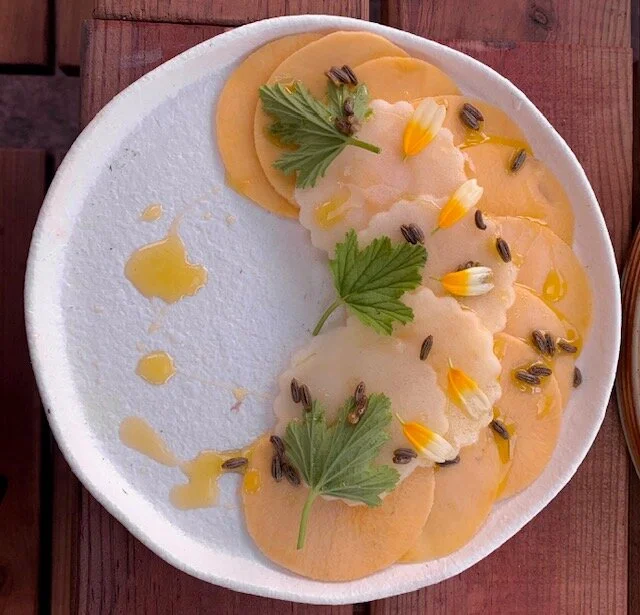
From the other side of town Eusebi Restaurant & Deli head chef Seb Wereski has created a stunning salad of humble cauliflower, deconstructed and rethought to use every bit of it including the flower, leaves and stalk. It was topped with crispy leaves and house Mossgiel milk ricotta – whose whey is also used in the salad dressing. This zero-waste dish will be on the menu throughout the pilot Plate Up For Glasgow campaign, the first of its kind for Scotland, designed to address food waste and its impact on climate change.

Plate up for Glasgow - chefs.jpg

At the campaign launch, hosted by Drygate - where nine of the 35­­+ were cooking - innovation and commitment to the cause were evident. I must say it’s the first time I’ve witnessed such a collaborative, unified and visible stand against climate change from the city’s hospitality industry. Sprigg, Bowl, Broken Pony, Riverhill Coffee Bar, The Duke’s Umbrella, the Gate and The Finnieston also came up with delicious ideas that illustrated how possible it is to eat and drink sustainably, affordably and well, while helping save the planet one dish at a time (actually, that last bit is the campaign’s own slogan). Pictured above are the chefs from the night: L-R Frazer McGonigle (Broken Pony); Tom McDermott (Sprigg); Seb Wereski (Eusebi Restaurant and Deli); John Molloy (The Duke's Umbrella); Colin Campbell (Bowl); Lewis Benett (Sprigg); Jake Walters (Drygate).

Now other top participating venues have been revealed and include Alston Bar and Beef, Bar Brett, Café Gandolfi, Crab Shakk, Five March, the Gannet, Glaschu, Ka Pao, Mono, Ox and Finch, Porter & Rye, the Prancing Stag, and Ziques.

This hospitality-led pilot initiative, specifically scheduled to coincide with COP26, is backed by Glasgow Chamber of Commerce through its Circular Glasgow initiative, in partnership with Eusebi Restaurant and Deli and Experience Glasgow Food and Drink. It will see menus offering a range of sustainable Food Hero dishes and drinks, all designed to showcase at least one of four food waste reduction techniques – sourcing locally and rethinking existing menu items; showcasing food preservation techniques such as pickling, dehydrating and fermenting; using unfashionable cuts of meat and the whole animal; and/or creating a dish from surplus or donated food - challenging traditional and wasteful dining and takeaway business models with the goal of sending as little organic waste as possible to landfill.

A shocking one-third of food waste is still being binned and ends up as landfill every year, costing the Scottish hospitality industry £212m in landfill taxes. More pressingly perhaps is the fact that the process of layering waste creates methane, which has a global warming potential 21 times greater than carbon dioxide. Thus food waste is recognised as contributing more to climate change than plastics.

So the Plate Up For Glasgow campaign is timely, given Glasgow’s commitment to becoming carbon-neutral by 2023 – in addition to the small matter of it being due to host COP26 within days.

I mentioned in my previous post (about the Veg Cities Chefs’ Challenge in Glasgow) that in addition to the 100+ world leaders due to attend COP26 - and whose catering needs will be provided within the secure Scottish Events Campus - it’s anticipated that hundreds of COP26 attendees from around the globe are expected to descend on Glasgow next month, and are already booking tables at hospitality venues whose menues prioritise hyper-local, high-welfare, ethical and sustainable food and drink experiences from those independent outlets who are not tied to the central buying policies of the larger hospitality groups. In other words, exactly the venues participating in the Plate Up campaign.

Rebecca Ricketts, Campaign Lead for Plate Up For Glasgow, said: “Food waste currently costs the Scottish hospitality industry approximately £212 million annually and is recognised to be a bigger cause of climate change than plastics. Through Plate up for Glasgow we hope to bring the industry together … learning collaboratively how to become sustainable and profitable for the future.”

So the challenge has been set. Now it’s up to consumers and diners. And if successful, will the rest of Scotland join in?

* Applications to join the campaign are open until October 22, and reservations for diners can be made via https://plateupforglasgow.co.uk/book-now/


Red meat: the bite-back begins!

Exclusive: A new collaboration between The Gannet restaurant and MacDuff Butcher- launching in Edinburgh on Wednesday August 11 - aims to build a closer direct relationship between consumers and where meat comes from, how it’s been reared - and how best to cook it. Taking place every Wednesday at the new St James’ Quarter, the bespoke service is the first of its kind in Scotland. Read on …

“We’re fans of fat”: Andrew Duff on the benefits of grass-fed beef

“We’re fans of fat”: Andrew Duff on the benefits of grass-fed beef

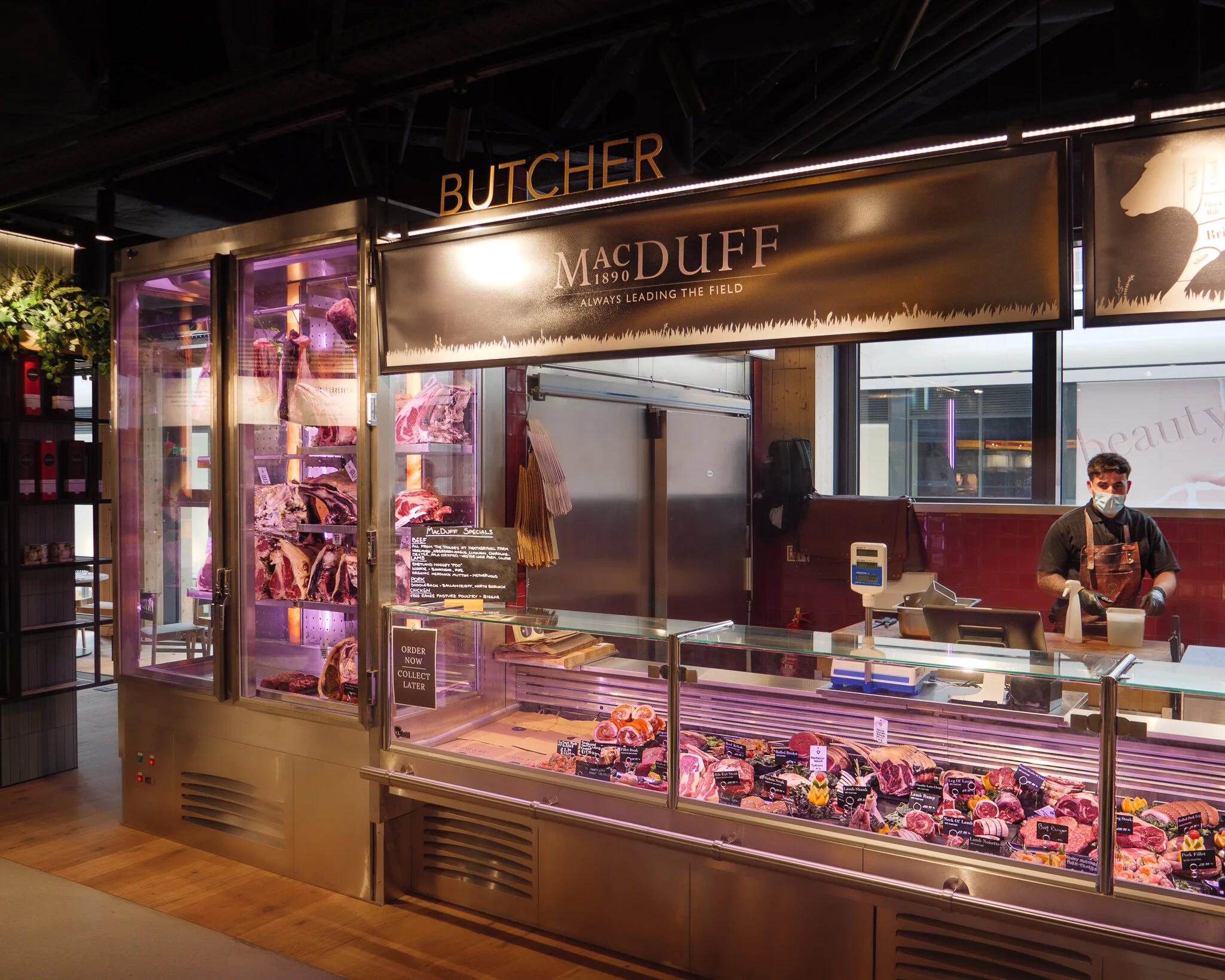
The idea of The Butcher’s Cut is that you visit the MacDuff Butcher counter - situated at Bonnie & Wild food marketplace on the fourth floor of Edinburgh’s new St James’ Quarter - discuss the choices on offer, and choose your cut of beef. The Gannet East restaurant – just five metres away - will then collect your meat and have it cooked to order for you by head chef John Munro and co-patron Ivan Stein (pictured below).

Initially the steaks on offer are a dry-aged flat iron, a MacDuff four-week dried rib-eye, and a “guest cut” of 11-year old Galician bone-in rib-eye.

John Munro, head chef at The Gannet East, and Ivan Stein, The Gannet’s co-patron, below 

John Munro, head chef at The Gannet East, and Ivan Stein, The Gannet’s co-patron, below


“To have a butcher’s counter right beside a restaurant is unusual and we believe this is the first bespoke service of its kind in Scotland,” said Andrew Duff, the 33-year-old great-grandson of MacDuff founder Peter Duff and the brains behind the bold new venture. “It is a truly unique experience for all of us. We’ve worked with The Gannet in Glasgow for several years and when we got the opportunity to do this with them at Bonnie & Wild it seemed a match made in heaven.”

The MacDuff Butcher counter is the first retail outlet for the 126-year-old Wishaw-based firm which, in addition to supplying independent butchers in London, also supplies some top-end restaurants such as The Little Chartroom, Café St Honore and L’escargot Bleu in Edinburgh, Unalome by Graeme Cheevers and Restaurant Eighty-Eight as well as The Gannet in Glasgow, and The Quality Chop House and Flat Iron in London. MacDuff sources only grass-fed cattle from a carefully curated network of dedicated small-scale farmers in Scotland. Its cutting room in Wishaw is Pasture for Life approved, as is the Wishaw abattoir next door.

Trying something like this in a shopping mall environment, albeit in the high-end food marketplace af the St James Quarter, is pretty brave given the - apparently - growing anti-meat movement. Will people go for it?

The MacDuff Butcher’s counter at Bonnie & Wild

The MacDuff Butcher’s counter at Bonnie & Wild

“There’s a growing demand in the UK for a well-sourced, quality top-end product that people are willing to pay for,” Andrew Duff tells me. “One of the good things to come out of the Covid-19 pandemic is that it has spawned a greater appreciation, especially among the younger demographic, of the benefits of buying local, low-impact and high welfare produce.

“On top of that, Brexit has completely closed off our export market to the EU. That all led us to consider how we could develop the business for the growing home market.

“More people are beginning to realise that there are fantastic health benefits in Scotch grass fed meat such as higher levels of Omega 3 and Vitamin B12. And we’re fans of fat, which creates beautiful marbling and great flavour and also lowers LDL cholesterol levels.

“We hope that our butchers - who are all aged under 35 - will connect with consumers of all ages to impart that directly to them. And it’s not just about health, it’s also about how pasture-led farming is beneficial to the environment and the climate.."

So vegans take note? “I’m not against veganism but am alarmed at many of the meat substitutes on the market which are highly-processed and contain ingredients imported from all over the world.

“We want to attract the younger flexitarian consumer- and there are more of them than vegans - and to promote a healthy balanced diet that includes high-welfare, low-impact, fully traceable and excellent quality red meat.”

Duff is overseeing some pretty exciting tie-ins with other Scottish producers, such as the Edinburgh Butter Company, Blackthorn Salt and Macduff Distillery for new marinades and flavourings, and is looking to expand his offer with Herbmajesty free-range chicken and pork. If The Butchers’ Cut takes off, these may be added to The Gannet East’s menu in future.

Ivan Stein, chef and co-patron of The Gannet in Glasgow and Edinburgh, said: “This is great for us. We’ve been working with MacDuff for years as what they do matches our ethos of buying direct from small-scale local farmers, growers and producers and maintaining close contact with them.

“The Butcher’s Cut is a great opportunity to offer something new and different. It’s a move that creates a link between the raw product and the final dish. We want to show customers what you can do with what they’re buying at the butcher’s as some may not have the confidence to buy meat and cook it at home. They’ll be able to see the direct line between producer and plate, which is what we’re all about.”

And how will the beef be cooked?

“At The Gannet East we use plancha and oven, so we use cuts that lend themselves to quick cooking. It suits our simplified menu, which we’ve tailored to suit the high-footfall, quick turnaround environment we’re in at Bonnie & Wild. Our protein-based dishes are already selling well to the younger demographic and we look forward to developing that.”

ENDS

UPDATED MAY 27, 2022: East meets (and greets) West in major Scottish foodie movement

Yet more Glasgow-based independents expand Eastwards. Read on …

(Previous post, dated June 2021:) Well, it’s almost as if the starting blocks have finally been lifted after a year (and more) of champing at the bit. Some pretty significant developments in the Scottish eating-out scene are emerging, no doubt with more to follow.

Following the sensational win in January of Glasgow’s first Michelin Star for 18 years at Cail Bruich under new head chef Lorna McNee, I reckon the most remarkable change in the pipeline is the migration from West to East, with several of the top names in Glasgow’s independent restaurant sector opening outlets in Edinburgh. To be more precise, in Edinburgh’s Bonnie & Wild Scottish food marketplace at the new St James Quarter.

First of these to be announced was Creel Caught, the first solo venture from MasterChef: The Professionals winner Gary Maclean (pictured below left), Scotland’s national chef and lecturer at City of Glasgow College. He has appointed Glasgow-born, Perth-based Stuart Wilson as head chef of the casual dining spot which will champion Scotland’s exceptional seafood paired with seasonal ingredients. There will be nine dishes on the menu to include lobster Thermidor mac‘n’cheese, grilled langoustines with seaweed butter, and monkfish scampi with fries. 

garymaclean.college.jpg

“We are working with three fishmongers - Ethical Shellfish Company on Mull, Amity of Aberdeen and Campbell’s Edinburgh - who will supply us with whatever is available each day and our dishes will be dictated by that,” explained chef Gary. “The whole point of this is to focus on freshness, sustainability and flexibility, and to get the most amazing Scotish seafood into people’s hands at a good price.

“This is set to be a Food Hall like no other and it’s precisely why I chose Bonnie & Wild as the location for my first ever solo dining venture.”

Next to announce an expansion to the Bonnie & Wild Scottish food market was the Finnieston stalwart The Gannet.

The Gannet East will open at the end of the month and I can reveal the newly-appointed head chef is John Munro (pictured below). He is a former senior sous-chef at Timberyard, Edinburgh, working under Ben Radford, and senior sous-chef at Tommy Banks’ Michelin-starred Old Swan at Oldstead, Yorkshire.

JohnMunro.jpeg

“We have struck gold with John,” says Peter McKenna, chef-patron of The Gannet. “He brings a wealth of experience back to Scotland and his cooking is similar to our ethos of local, seasonal, and simple. The Gannet East will be serving small plates of beautiful dishes and John will have a shellfish counter and the fabulous Macduff butchery supplying Scotch beef and lamb on his doorstep.

“I see The Gannet East as being a showcase for what we do at The Gannet.”

And Glasgow restaurant group that owns Ox and Finch recently opened a new outlet in Edinburgh of its popular South East Asian oriented Ka Pao. Its large outlet at SJQ is on level 4, overlooking St James Square.

JonathanMacDonald.jpg

Jonathan MacDonald, chef-patron (below left), explains: “The name Ka Pao is a play on the Thai word for holy basil, the menu is influenced by the cooking of South East Asia. I’ve spent a lot of time travelling and working in that part of the world and have always had a fascination with the food. It’s a passion shared with Daniel and Sandy, our senior chefs, who have also spent time working in Thailand and travelling throughout the region.

“We are incredibly excited to be bringing Ka Pao to Edinburgh and we know that the restaurant’s fun, relaxed, party vibe will be an excellent fit.”

**NEWER West-to-East openings include Glasgow-based BBC Chef Jimmy Lee’s Salt & Chilli Oriental, Glasgow-based winner of UK’s best burger, El Perro Negro, and - you guessed it - Glasgow-based once again! - the fast-expanding start-up “pancake pioneers” Stack and Still (right).

It’s not all one-way traffic. Travelling in the opposite direction - from East to West - is chef Martin Wishart of the eponymous Michelin-starred Restaurant Martin Wishart in Leith, who is returning to Cameron House at Loch Lomond with former colleague Paul Tamburrini to open a new restaurant at the famous lochside hotel, which sufferered a devastating fire in December 2017 which among many other losses destroyed Wishart’s Michelin-starred restaurant there.

The two chefs (pictured below) have enjoyed a long relationship having worked together for over 20 years at Restaurant Martin Wishart in Leith and The Honours in North Castle Street, Edinburgh, which closed in 2020 because of the pandemic.

L to R Paul Tamburrini and Martin Wishart(1).jpg

Paul Tamburrini (left in photo) said: “Cameron House Resort is a very special place. I worked there in the early stages of my career and loved every minute of it, so to now be leading a new fine dining offering in tandem with Martin Wishart is an absolute honour. We have collaborated successfully in the past and we’re confident this venture at Cameron House will be no different. We have the same vision on food and attention to detail, so it just works, and this is an amazing opportunity for us to be working together again at Scotland’s number one resort.

Cameron House Loch Lomond is, of course, where Glasgow-based chef Graeme Cheevers maintained a Michelin star for seven consecutive years. After some lockdown building delays, he opens his first stand-alone venture Unalome by Graeme Cheevers in the West End of Glasgow next to Kelvingrove Park today.

It’s a fair bet that this is one Glasgow restaurat that will be staying put for the foreeable.

Top Edinburgh chef backs Cheevers' Michelin Star bid for Glasgow *Exclusive*

Good to speak exclusively with chef Graeme Cheevers’ former mentor and my long-term professional contact, Martin Wishart - for whose eponymous restaurant at Cameron House Cheevers gained a Michelin star and retained it for seven consecutive years - and to hear him support his protege’s ambition to attract a Michelin Star for his home city. Here’s my exclusive interview with the Glasgow chef just before he went public:

Graeme Cheevers at Unalome, his first solo venture in Glasgow set to open next spring

Graeme Cheevers at Unalome, his first solo venture in Glasgow set to open next spring

EXCLUSIVE first published by The Herald, Dec 5, 2020

One of Scotland’s top chefs is set to open his own restaurant in Glasgow – raising hopes of the city gaining its first Michelin Star since 2004.

Graeme Cheevers, 32, gained a Michelin star for Restaurant Martin Wishart at Loch Lomond at the Cameron House resort and retained it for seven years until it closed following the hotel’s devastating fire in 2017. He went on to gain another Michelin Star at the luxury Isle of Eriska near Oban in Argyll last October, and left just before lockdown earlier this year.

Martin Wishart and Graeme Cheevers in the kitchen at Wishart’s Cameron House restaurant when I interviewed them in 2016. Photo credit: Jamie Simpson @jamiesimpson.photo

Martin Wishart and Graeme Cheevers in the kitchen at Wishart’s Cameron House restaurant when I interviewed them in 2016. Photo credit: Jamie Simpson @jamiesimpson.photo

Now he is set to fulfil his dream of opening Unalome, his own 50-cover restaurant in a Victorian townhouse on the site of the former Sisters restaurant in Kelvingrove near Finnieston in the spring. He describes it as “like nothing anybody has seen before” - and makes no bones about aiming for a Michelin Star in its first year. It’s an ambition backed by his former mentor Martin Wishart.

“Unalome translates as ‘the journey to enlightenment’ and after 18 years in the business I feel this is where I should be, because this has always been my dream,” he told me. “I definitely want a Michelin Star in the first year of opening, and then aim to progress to two Stars for Glasgow because the city deserves it.”

Although he has yet to confirm his ever-changing A La Carte and Tasting menus, chef Cheevers described his food as “relaxed, unpretentious, of the highest seasonal quality but most importantly really tasty”. Unusually, he will personally serve dishes direct to diners at the table with the aim of increasing interaction with and focus on the food.

“I want to refine what I was doing at Martin Wishart at Cameron House, and to elevate the flavours while simplifying the plate,” he said.

“I want people to feel comfortable, not threatened, as if they’re walking into someone’s dining room - and there will be no fancy words on my menus,” he said, although he is classically French trained. Four bar stools will be available close to the kitchen where diners will be served what he is cooking that day in a move he described as “kitchen dining”, as he dislikes the formal phrase “chef’s table”.

The existing kitchen prep and pass areas are being pivoted so that diners will be able to see the chefs - a brigade he has yet to recruit - in action, while the dining area is being expanded. The look is to be “modern European” with lots of natural stone and shades of brown, green and black.

Glasgow has not had a Michelin-starred restaurant since 2004, when Gordon Ramsay closed Amaryllis at One Devonshire Gardens, citing as the reason a lack of interest in fine-dining in the city. Scotland currently has nine Michelin-starred restaurants and one two-starred restaurant.

Cheevers aims to open Unalome in February or March next year. “If I get a Michelin Star for Glasgow it would be the greatest thing. It would attract more people into the area because people travel for food; food tourism is a big thing.

“I see nothing wrong with having ambition. I don’t want to sound immodest, but if anyone can do this for Glasgow it is me.”

HIs determination is supported by his mentor Martin Wishart, whose own Edinburgh restaurant has a Michelin star and who first employed Cheevers as a commis chef at Cameron House in 2010, promoting him to Head Chef.

He told me: “This is very exciting news for us all. It gives me enormous pride to see Graeme fulfil his dream and open his own restaurant. He is a real chef, with not only a natural talent but also a fundamental understanding of taste and gastronomy.

“I have no doubt he will become the very best Scotland has to offer. I wish Graeme success and am sure it will only be a matter of time before he gives Glasgow the Michelin stars it deserves.”

[Text and main photo ©CateDevine]

My exclusive published in The Herald @heraldscotland

My exclusive published in The Herald @heraldscotland